

Japan-Born Ramen Franchise Success Stories
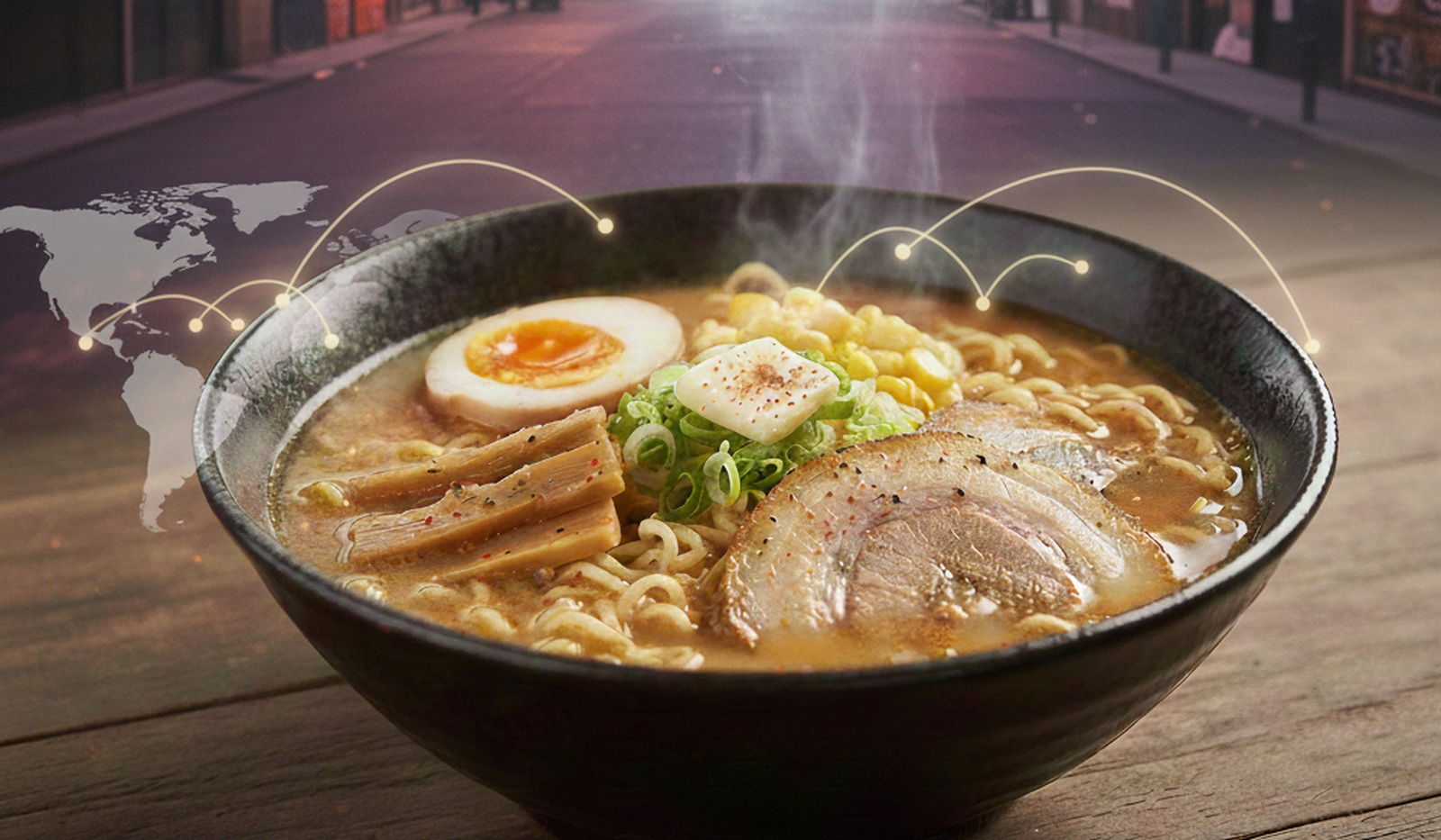
Ramen, born in Japan, has now secured its place as a major global meal—so much so that whether you're walking through shopping malls, business districts, or tourist areas in countless countries, you're likely to spot signs that read "Ramen" or "Japanese Noodles."
For owners and agents considering opening a new restaurant through a franchise model, ramen is increasingly emerging as one of the most realistic—and appealing—options. In this article, we draw on an interview with an expert who has supported the overseas expansion of Japan-origin ramen brands. By tracing two brands that have actually succeeded abroad, we will organize what makes ramen franchises attractive and what key points you should keep in mind when evaluating this opportunity.
The Bar Has Risen.
Authentic Wins.
In today's ramen market, the era when "Japanese-style" was good enough is coming to an end. As more people travel to Japan and experience ramen in its birthplace, a growing number of customers around the world are choosing where to eat based on standards such as "How close is it to the bowl I had in Japan?" and "Is this truly a shop run by a Japanese brand?"
In other words, it is now a decisive factor not only how faithfully a franchise can recreate "authentic, made-in-Japan quality"—from the details of the soup and noodles to the final presentation—but also whether the brand's concept and story genuinely fit the local food culture and lifestyle in that country. These elements increasingly determine whether a ramen brand will be chosen as a franchise.
Skip the Trial and Error.
Japan Already Did It.
Against this backdrop, one practical and compelling option for owners and agents who want to operate ramen as a franchise is to partner with a ramen brand that already has a proven track record in Japan. When the brand packages and provides everything from soup and noodle recipes to preparation methods and store operations, it becomes easier to balance authenticity with consistent reproducibility.
So how do companies that have successfully scaled Japanese ramen brands across multiple countries and regions build their franchise models? From here, we introduce a Q&A-style interview with Mr. Tsuchiya, Representative of Assentia Holdings, who has supported overseas openings in 27 countries and more than 200 stores to date.
27 Countries. 200+ Stores.
Here's What Works. (Q&A)
Q1. Why Is There an Opportunity in
Ramen Franchises Right Now?
Ramen is no longer a "rare Japanese dish"—it has become a global food eaten routinely in cities around the world. At the same time, more people have visited Japan and tasted ramen there, and the number of customers who care about "how close it is to what I ate in Japan" has increased.
That means the market has already expanded, and the appetite for what the soup actually traces back to is also rising. In this moment, ramen franchises that trace their recipe and supply chain directly back to Japan are well-positioned in this shift—precisely because customers now have a clearer reference point for what the real thing tastes like.
Q2. What Are You Doing to Reproduce
"Authentic, Made-in-Japan Quality"
in a Franchise Model?
The most important point is to develop and refine the "core of the flavor"—things like the soup base and miso tare—on the Japan side, and build a system that can supply them consistently from Japan to each country. By processing them into formats that can be transported at ambient temperature, such as retort pouches rather than frozen shipments, it becomes easier to control both logistics costs and quality.
At the store level, we design the process so that staff finish each bowl individually in a small pot, following set recipes and procedures. This allows each location—regardless of country or store—to reproduce a taste that is close to what you'd find in Japan.
Q3. Can Someone Run a Ramen Franchise
Without Artisan-Level Restaurant Experience?
One bottleneck when launching a ramen shop is the need to rely on veteran artisans for soup-making and other specialized work. In the brands we design specifically for franchising, we narrow the store-side work down to "consistently executing a defined flow."
As a result, even owners and staff without prior restaurant experience can reach a comparable level of quality with relatively short training, lowering the hurdles for hiring and staff development.
Q4. What Kinds of Ramen
Are Preferred Overseas?
In many countries, ramen is perceived less as a "noodle dish" and more as a "soup dish." Rather than focusing on noodle texture, customers tend to prioritize points such as "What kind of soup is it?", "Is it too heavy?", and "Does it fit local eating habits?"
That's why, depending on the country, we tune the product to local preferences and values—for example, slightly reducing the smell of tonkotsu, offering miso-based options, or preparing vegan-friendly menu items.
Q5. How Important Is
the Brand Story?
In overseas ramen markets, there are broadly two types of demand. One is from people who want to operate a world-famous, instantly recognizable brand. The other is from people who want to choose a brand with a compelling story, including its history and background.
In markets like Europe, where respect for food culture tends to be strong, the story-driven preference is particularly pronounced. For example, a miso ramen brand developed in partnership with a 240-year-old miso maker in Nagano is valued for having a background that people can talk about—and that becomes a reason it gets chosen.
Q6. For Owners and Agents
Considering a Ramen Franchise,
What Role Does a Partner Company Like Assentia Play?
In short, we help select a Japanese brand that fits the local market, and then stay alongside you through launch and operations. Based on your business background, location, target customers, and other factors, we propose candidates not only from proven brands like Bariuma and Takesan, but also from other Japanese brands.
We then provide end-to-end support—coordination with the brand headquarters, local market visits, building contract schemes, and setting up operations—significantly reducing the burden of "finding a brand from scratch, negotiating, and building the system yourself."
Two Brands. Two Approaches.
Both Winning Overseas.
From here, we briefly introduce two examples—Bariuma and Takesan—selected from the ramen brands that Assentia Holdings has supported. Each is a model case for Japanese food franchising, with different approaches to soup design and story-driven branding.
Bariuma
Bariuma Ramen expanded domestically in Japan before growing into markets such as Singapore, Malaysia, Indonesia, the Philippines, Australia, and the United Kingdom (Scotland). It currently operates a network of roughly 35 locations, aiming to balance multi-store expansion with quality consistency by following the franchise model built by Assentia.

Bariuma
Bariuma's rich yet creamy shoyu-tonkotsu soup, along with its concept of being "a ramen shop that can be reproduced even without an artisan," and the brand's philosophy behind product development are explained in more detail on the brand's dedicated page. If you want to better understand the flavor design and brand story, it's worth taking a look.
Takesan
Takesan Ramen is a miso ramen brand expanding overseas on the back of its popularity in Japan, focusing on regions with strong interest in miso culture and markets that value storytelling. In particular, in Paris, France, its background as "a ramen brand created in partnership with a long-established miso maker" has been well received, becoming a differentiation factor in a market that places high value on respect for food culture.

Takesan
Its key features include a soup made with miso prepared by a long-established miso maker in Nagano with 240 years of history, the depth and aroma unique to cedar-barrel aging, and a serving style that keeps the ramen hot by using an earthenware pot. If you want to learn more about the background of a story-rich miso ramen brand from Japan, it's worth checking out.
Authentic. Reproducible.
A Story Worth Telling.
That's the Formula.
What's shifted in ramen specifically is that the comparison point is now Japan itself. Customers who've eaten at a shop in Fukuoka or Sapporo are walking into overseas locations with a reference. That's a harder bar to clear — and a more specific one than "does this taste Japanese?"
In this environment, if you are planning to operate a Japanese food restaurant through a franchise, selecting a brand around the following points will lead to long-term success:
- A brand with operating stores in Japan, a documented recipe history, and a supply chain you can trace
- An operation design that is simple, stable, and easy to reproduce locally
- A story you can tell—such as history, origin, or provenance
What Assentia has built, across 27 countries and 200+ locations, is a matching and setup process — identifying which brand fits a given market, then staying involved through contracting, local visits, and early operations. The two brands introduced here, Bariuma and Takesan, represent different ends of that range: one built on operational repeatability, the other on provenance.
For owners and agents considering a ramen franchise, the window for entering markets where Japanese ramen remains underrepresented — with a brand that has infrastructure behind it — appears open in several regions. The Bariuma and Takesan cases suggest that the formula — traceable supply chain, reproducible operations, a story the market can engage with — tends to hold across different countries and entry points.
Interview cooperation: Assentia Holdings
| Company name | AssentiaHoldings,Inc. |
|---|---|
| Established | August 29, 2006 |
| Main business activities | Franchise headquarters support; franchisee support; support for restaurant and food service companies; overseas expansion and market entry support; and more |
| URL | https://fc.assentia-hd.com/ja/home |