

Gyu-Kaku
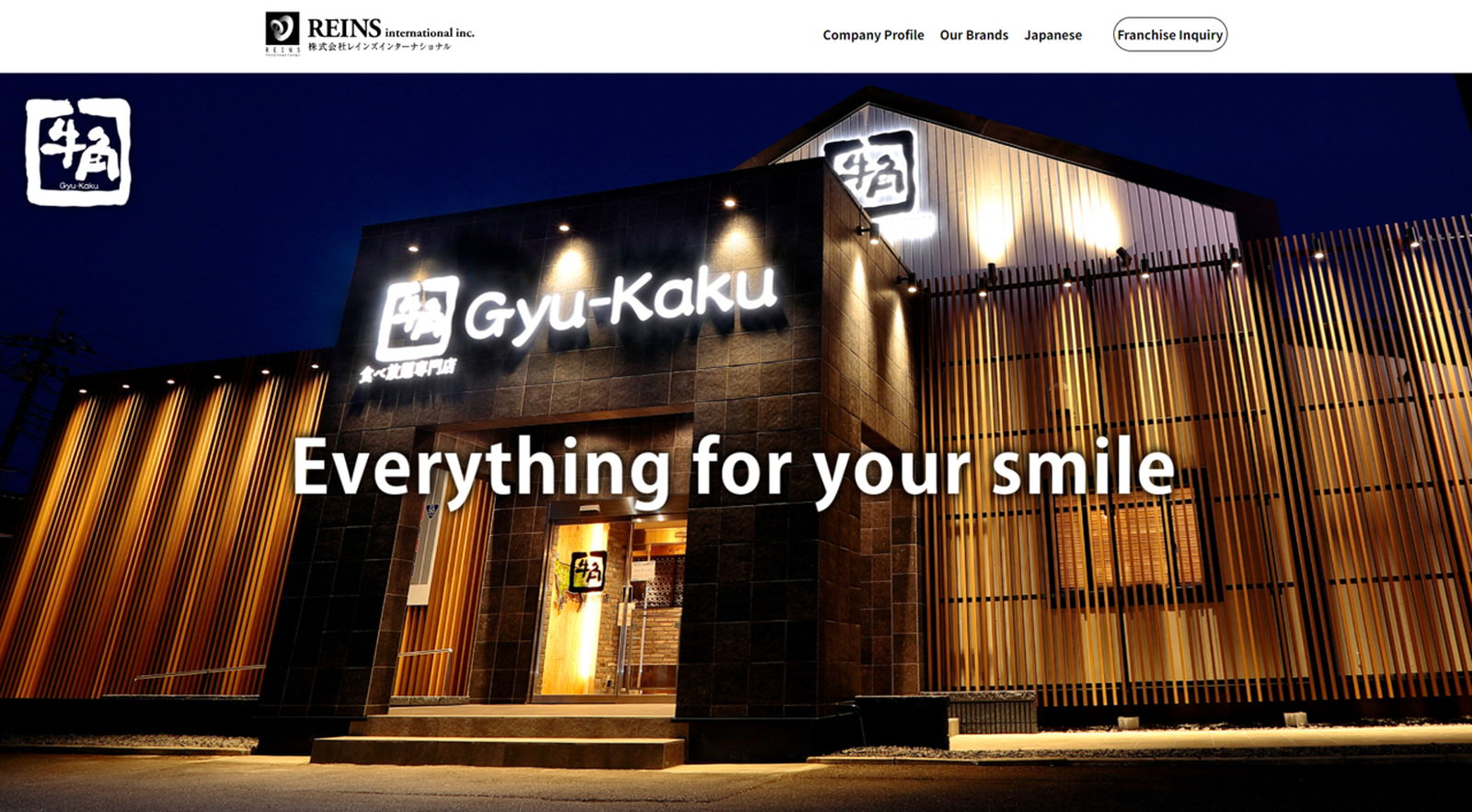
Gyu-Kaku is a globally recognized Japan-born yakiniku brand founded in 1996, now operating 295 locations internationally. This page covers its overseas expansion status, key operational features, and franchise contract types for international operators.
Overseas Franchise
Expansion Status
| Products and Services Offered | Yakiniku (shichirin charcoal-grill style); time-limited all-you-can-eat courses; a variety of takeaway sauces. (Menus may vary by location.) |
|---|---|
| Countries of Overseas Expansion | USA, Taiwan, Hong Kong, Singapore, Indonesia, Philippines, Malaysia, Vietnam, Thailand, etc. |
| Number of Overseas Locations | 295 overseas locations (official published figure as of October 2023). |
| Franchise Contract Type | Single-unit franchise agreements / area development agreements / master franchise agreements. |
https://www.reins.co.jp/fc/brand/gyukaku/
https://www.gyukaku.ne.jp/world.php
Born in Tokyo, 1996.
Grilling in 20+ Countries Today.
Born in Tokyo's Sangenjaya district in 1996, Gyu-Kaku has grown rapidly under the motto of "making great yakiniku something everyone can enjoy casually." Its first overseas restaurant opened in Los Angeles in 2001, followed by entry into Taiwan in 2002, marking a major step into Asian markets.
The experiential style of dining around a shichirin charcoal grill lets guests share the "fun of grilling" without needing any translation, and that appeal has spread quickly on social media. As of October 2023, Gyu-Kaku operated 295 overseas locations and more than 800 restaurants worldwide. Although expansion temporarily slowed during the pandemic, the brand introduced frozen-meat sub-brands and takeaway sauces to keep fans engaged. Its circle of charcoal grills continues to spread from the Americas to ASEAN countries and into the Middle East.
Key Features of
the Overseas Franchise
Staff Guide the Grill.
Guests Do the Rest.
Tables Stay Full.
The concept is popular with diners in North America as well. Roaster-integrated tables turn the entire dining experience into entertainment, giving the table experience a shape that is difficult to replicate in formats without a built-in grill. Standardized service steps—in which staff guide guests on grilling times and how best to enjoy each cut—create a shared "let's grill together" experience that works even across language barriers.
Ship the Sauce.
Source the Beef Locally.
Margins Hold.
Signature sauces developed in Japan—such as miso-based harami marinades and soy-based yakiniku sauces—are preserved, while locally sourced meats like USDA or AAA-grade beef are used in each market. This approach has been well received overseas, a combination that tends to work across family groups and more occasion-driven visits alike. While the seasonings are Japanese in style, the menu also includes elements such as kimchi and fried garlic on the side, creating a distinctive "hybrid" flavor profile.
Timed Courses. Predictable Spend.
Alcohol Lifts the Margin.
Restaurants combining mobile ordering with time-limited all-you-can-eat courses tend to see less variance in per-guest spend. In Southeast Asia, younger customers enjoy sharing "all-you-can-eat with friends" experiences on social media, generating organic content. Compared with other buffet-style concepts, Gyu-Kaku tends to extend dwell time while giving alcohol sales a meaningful role in the revenue mix.
Reviews from Store Visitors
The food was awesome, and the experience was great. Our server was always making sure we were taken care of.
We enjoyed the beef and seafood. Our teenagers had fun cooking the food over the grill. The service was good.
Very clean restaurant with excellent service. Staff constantly checked on us and topped up our drinks without us asking.
Amazing and incredibly generous.
Delicious food—worth every rupiah.
Gyu-Kaku
Company Information
| Brand Name | Gyu-Kaku |
|---|---|
| Company Name | REINS International Inc. |
| Head Office Location | 1-21-1 Dogenzaka, Shibuya-ku, Tokyo, Japan |
| Date of Establishment | January 1996 |
【Quick Poll】What's driving your interest in a Japanese food franchise?
※ Click to see how others voted.


Reading the reviews, you can tell Gyu-Kaku has become part of everyday life in many markets. Using local ingredients requires navigating cost changes or halal requirements, but the experience of grilling at the table — guided by staff, anchored in Japanese-style sauces — seems to hold its own regardless of the market. What the reviews suggest, at least, is that the format is harder to walk away from than most.