

Matsuya
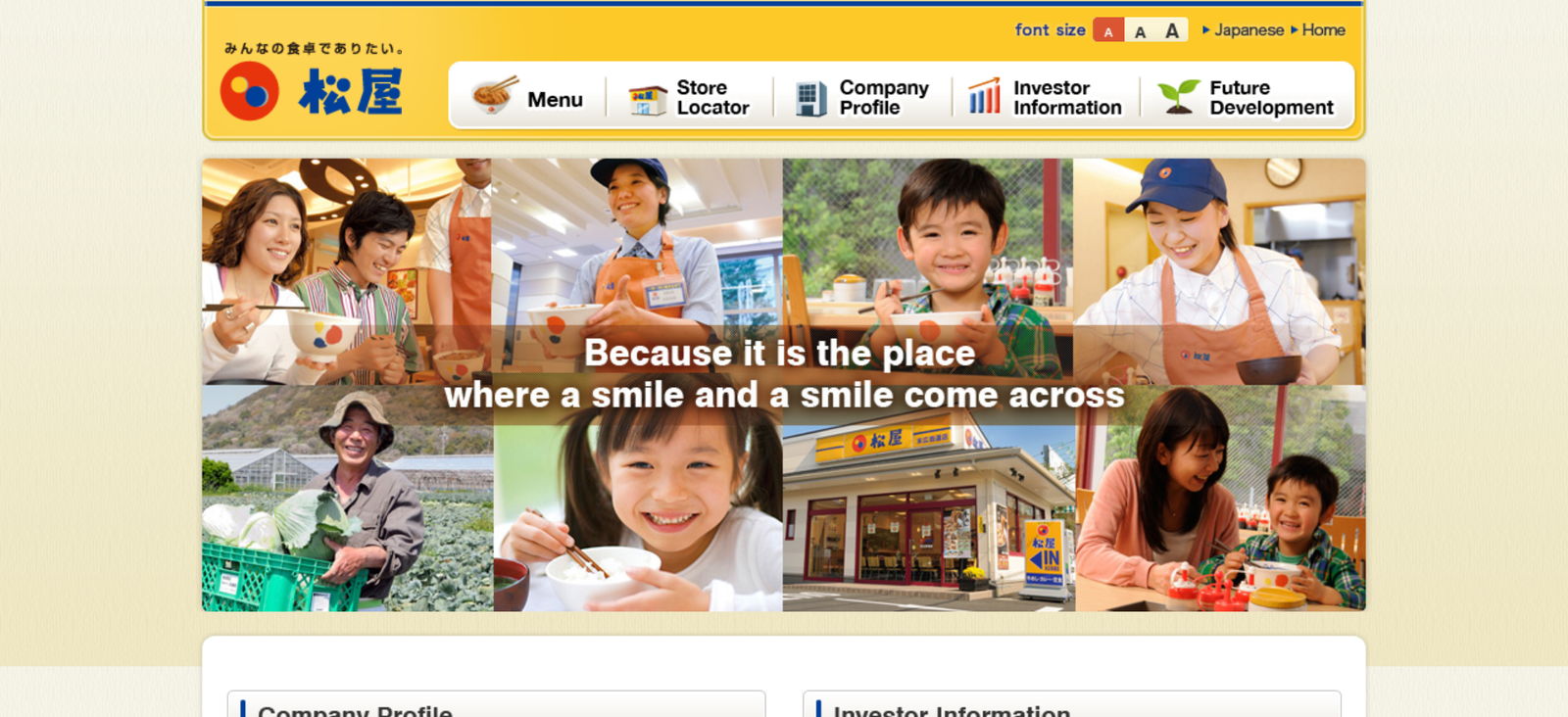
Matsuya is a prominent Japan-born gyumeshi (beef bowl) brand founded in 1966, now operating 35 locations internationally. This page covers its overseas expansion status, key operational features, and franchise contract types for international operators.
Overseas Franchise
Expansion Status
| Products and Services Offered | Gyumeshi (Beef Bowl), Curry, Teishoku (Set Meals), Tonkatsu (Multi-Brand Stores) |
|---|---|
| Countries of Overseas Expansion | Taiwan / Hong Kong / Shanghai / Vietnam (As of January 2026) |
| Number of Overseas Locations | 35 stores* (As of January 2026) |
| Franchise Contract Type | Franchise Agreement / Joint Venture (JV) / Direct Management |
More Than a Bowl.
A Full-Meal Destination.
Founded in 1966, Matsuya is a prominent gyumeshi (beef bowl) chain in Japan, built around a "Teishoku" (set meal) format that goes beyond a standard beef bowl offering. In its international expansion, the brand utilizes a mix of direct management, joint ventures, and franchise agreements with local partners to grow its presence, primarily in Asian markets.
Standardizing the Teishoku format—consisting of a main dish, rice, miso soup, and salad—alongside traditional rice bowls has enabled the brand to capture demand from customers seeking a complete, substantial meal. This positioning allows Matsuya to function as a staple dining destination for daily use.
Key Features of
the Overseas Franchise
Gyumeshi Today.
Tonkatsu Tomorrow.
One Kitchen.
A defining characteristic of Matsuya is its extensive lineup of Teishoku menus despite being a beef bowl chain. By offering diverse main dishes such as Yakiniku (grilled meat) and Hamburger steaks, the brand achieves a menu composition that encourages frequent, long-term repeat visits.
Furthermore, the flexibility to operate multi-brand locations combined with "Matsunoya" (a tonkatsu specialty brand) allows the stores to capture demand for fried foods. The result is a menu that holds up across different customer moods and price expectations — and isn't as exposed to swings in any single ingredient.
Smart Kiosks. Fewer Staff.
Less Lost in Translation.
Leveraging its proven track record in Japan, Matsuya standardizes the use of multilingual, touch-panel ticket machines in its overseas stores. By automating the ordering and payment processes, the model reduces the required number of front-of-house staff and enables precise management of labor costs.
Additionally, this system mitigates risks inherent in global expansion, such as ordering errors due to language barriers or cash-handling discrepancies. The environment, where customers can order at their own pace, also makes it easier to add toppings and sides — which tends to nudge the order size up.
That said, operating a 24-hour model across markets with varying labor regulations and staffing norms requires more operational adaptation per market than the format might suggest.
No Additives. No Shortcuts.
That's the Policy.
Matsuya maintains rigorous quality control by upholding a policy of not using chemical seasonings, artificial sweeteners, synthetic colorings, or synthetic preservatives in the sauces and dressings of its primary menu items.
As interest in food safety rises across Asian markets, the combination of fast food convenience and a no-additive policy is a distinction that tends to resonate in markets where food safety awareness is rising. The reliability of the brand as a safe dining option, particularly for families, fosters long-term customer trust and sustained store traffic.
Reviews from Store Visitors
"Food was superb and the portions are great just like in Japan. Highly recommended!"
"Always love Japan food chain everytime i go travelling, 24hours and always give their best service"
"It's a basic bowl of rice with scrumptious beef sauce and slivers of well braised beef."
"Like the service specially the dude in the premise assisting customers for seatings etc. friendly and approachable. Glad is 24 hours outlet but pretty crowded around mid night period."
"Clean, fast service. Tasty food."
Matsuya
Company Information
| Brand Name | Matsuya |
|---|---|
| Company Name | Matsuya Foods Holdings Co., Ltd. |
| Head Office Location | 1-14-5 Nakamachi, Musashino-shi, Tokyo |
| Date of Establishment | 1966 |
【Quick Poll】What's driving your interest in a Japanese food franchise?
※ Click to see how others voted.

Zero Wasted Seats.
What stands out in the "True Japanese Quality" reviews is the expectation behind the words, not just the praise. Sustaining that standard across a 24-hour fast food operation is, perhaps, harder than it looks — and the fact that it appears to be holding in overseas markets is worth noting.
The ticket kiosk does more than reduce front-of-house load — in markets where language is a real variable, it removes a friction point that tends to be underestimated. The combination of gyumeshi, set meals, and tonkatsu starts to look less like a menu and more like a model designed to adapt. That distinction, perhaps, is worth sitting with.