

Japanese Food Franchise Startup Costs by Category
With the growing global interest in Japanese cuisine, an increasing number of owners and companies are considering opening locations overseas. This article summarizes the estimated initial costs in USD by major category, ranging from sweets to yakiniku and kaiten sushi. Use this as a reference alongside actual brand data and country-specific cost factors.
Estimated Initial Investment
by Category (USD)
The following amounts are estimates calculated based on each brand's FDD (Franchise Disclosure Document), public financial data, industry research reports, and our proprietary research. Actual costs will vary depending on the legal regulations of the target area, the initial condition of the property, and the store size. Please contact each company for accurate costs.
| Category | Estimated Initial Investment (USD) | Features of Equipment and Operations |
|---|---|---|
| Sweets / Dessert | $50,000 - $600,000 | Due to diverse store formats ranging from kiosks to street-level stores, the cost range is wide. Equipment is kept simple as special exhaust ventilation is not required. |
| Curry / Donburi | $100,000 - $400,000 | Kitchen equipment can be kept simple through recipe standardization. However, in some cases, import costs for Japanese ingredients may apply. |
| Ramen | $120,000 - $600,000 | The format requires large soup kettles and powerful exhaust systems. While preparation takes time, serving speed is fast, enabling high table turnover. |
| Udon / Soba | $150,000 - $1,200,000 | In-house noodle making requires noodle machines and plumbing facilities. Self-service formats assume a large seating area but contribute to reducing front-of-house staff. |
| Tonkatsu | $150,000 - $600,000 | The kitchen centers on commercial fryers. The frying process is standardized, enabling stable operations after minimal training. |
| Izakaya | $300,000 - $1,000,000+ | The format calls for a full-service kitchen alongside thoughtful interior atmosphere design. Operations are complex due to the variety of items, but it features a high average check, driven by alcohol sales. |
| Kaiten Sushi | $1,000,000 - $3,000,000+ | The format requires a full suite of high-tech equipment, including conveyor lanes and ordering tablets. While capital investment is large, this equipment configuration is designed to support meaningful labor savings. |
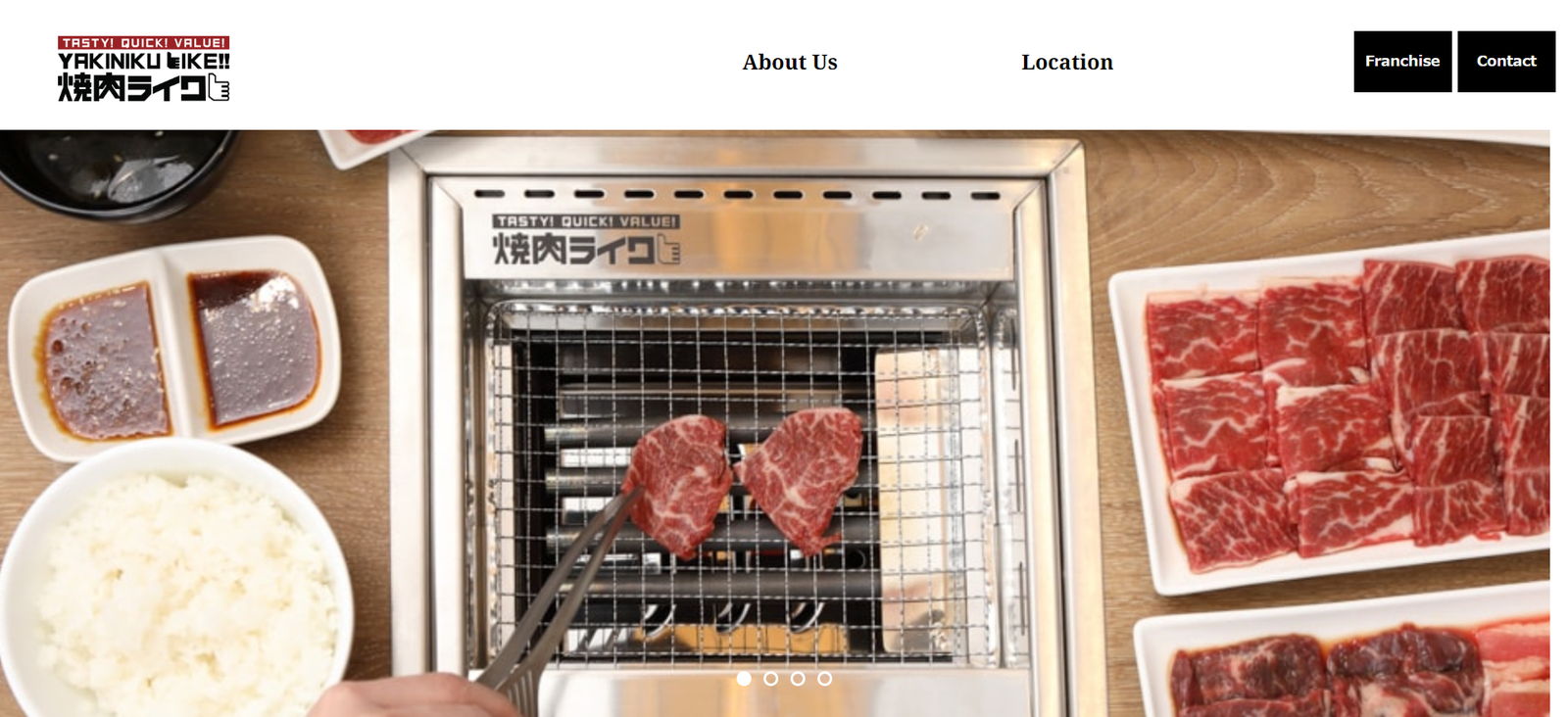
| Yakiniku | $500,000 - $2,600,000+ | The installation of smokeless roasters and individual exhaust ducts at every table is essential. Since customers cook their own food, kitchen operations are kept simple. |
| Teppan / Steak | $500,000 - $1,500,000 | Characterized by counter designs that showcase cooking right in front of the customers, in addition to teppanyaki grills and exhaust equipment. The chef's performance directly translates into the brand experience. |
Examples of Initial Costs and
Estimated Investment Payback Periods by Brand
This is reference data organized based on FDDs and public financial data of local subsidiaries for major brands with a track record of overseas expansion (including estimated values calculating the investment scale per store in USD based on CAPEX, etc.). These are estimates based solely on public information and do not guarantee actual revenue or payback periods.
| Brand Name | Category and Products Offered | Estimated Initial Costs (USD) | Estimated Investment Payback Period(for reference only) |
|---|---|---|---|
|
Gyu-Kaku (Gyu-Kaku / USA) |
Yakiniku / BBQ (Smokeless roaster yakiniku) |
$1,215,444 - $2,606,540 | Approx. 9.6 - 11.6 years [*1] |
|
Pepper Lunch (Pepper Lunch / USA) |
Teppan / Steak (DIY teppan fast food) |
$714,000 - $1,501,000 | Approx. 7.2 - 9.2 years [*2] |
|
Beard Papa's (Beard Papa's / USA) |
Sweets (Cream puff specialty store) |
$200,900 - $477,000 | Approx. 1.5 - 2.0 years [*3] |
|
Hachiban Ramen (Hachiban Ramen / Thailand) |
Ramen (Vegetable ramen / casual Chinese) |
$150,000 - $300,000 | Approx. 3.6 years [*4] |
|
Katsuya (Katsuya / Thailand) |
Tonkatsu (Tonkatsu specialty store) |
$200,000 - $400,000 | Approx. 3.5 - 5.0 years [*5] |
[*1] Reference: IFPG official website (https://www.ifpg.org/top-franchises/gyu-kaku-japanese-bbq-restaurant)
[*2] Reference: Franchise Payback official website (https://www.franchisepayback.com/franchise/pepper-lunch)
[*3] Reference: Franzy official website (https://franzy.com/franchises/beard-papas)
[*4] Reference: Hachiban official website (https://www.hachiban.co.jp/ir/)
[*5] Reference: ThaiPR.NET official website (https://www.thaipr.net/en/business_en/3585347)
* The estimated investment payback periods are estimates based on public financial data of each company, average sales stated in FDDs (Franchise Disclosure Documents), and revenue models by third-party specialized agencies, and do not guarantee future revenue or investment payback. Particularly in US expansion, figures fluctuate depending on location and operating costs.
* The payback period for Beard Papa's is an estimate based on a small-scale kiosk format. It varies depending on the store format.

More Than the Number.
Initial costs, ranging from hundreds of thousands to sometimes millions of dollars, include not merely equipment costs but also operational know-how designed to support owners without experience in the food and beverage industry. It is critical to evaluate the extent to which post-opening support, such as customer attraction at the time of opening and staff training, is covered.
Rather than judging by the disclosed number alone, the more useful question to ask directly is: what exactly does the franchisor's support structure cover — and what doesn't it.
Breakdown of Initial Costs and
Cost Structures Unique to Japanese Brands
General Breakdown of Initial Costs
(What's Included)
The structure of franchise initial costs itself is common worldwide, but in the case of Japanese food brands, there are unique cost circumstances different from food and beverage franchises in other countries.
| Item | Main Content |
|---|---|
| Franchise Fee | In addition to the right to use the brand and manuals, Japanese food franchises include the provision of advanced quality control know-how and original recipes to reproduce Japanese quality overseas. |
| Equipment | Introduction costs of dedicated equipment (fryers, noodle machines, etc.). This is an investment to replicate artisan techniques through purpose-built machinery, and this area tends to be higher than general fast-food franchises. |
| Build-out | Interior and exhaust/plumbing equipment. Particularly for yakiniku and ramen, exhaust requirements are strict, and compliance with local fire codes and building regulations can significantly drive up costs. |
| Working Capital | Working capital until entering stable operation from opening. Since Japanese food may require time to build dedicated ingredient procurement routes, it is advisable to secure working capital with an adequate buffer. |
When expanding overseas, there is sometimes a perception that brands originating from Japan have high initial costs. However, breaking down the equipment and franchise fee components reveals that these costs reflect specific operational decisions — equipment choices, quality systems, and support infrastructure — rather than abstract brand premiums.
Replacing Artisans with Equipment
Delicate techniques essential to Japanese food are systematized through purpose-built equipment (noodle machines, automatic fryers, smokeless roasters, etc.). This upfront investment mitigates the hiring costs of skilled artisans and the risk of operational disruptions caused by staffing shortages over the long term.
Spatial Design to Pursue High Profitability
in Small Properties
The Japanese food and beverage industry has developed deep expertise in making compact urban spaces work — keeping kitchen flow, seating, and service integrated. Franchise fees and design fees reflect space planning know-how for compact locations where kitchen efficiency and seating have to work together. The ability to generate high sales even with a limited area is driven by this highly space-efficient design philosophy.
Continuous Support System to Protect Brand Value
Franchise fees and royalties cover not merely the right to use a trademark, but also encompass comprehensive support drawing on the franchisor's full operational expertise, from the provision of original recipes to support for launching local operations and continuous quality control. Compared to starting from zero overseas, having an environment where many hurdles can be anticipated and addressed in advance serves as one of the major advantages of participating in a franchise.
Key Points of Cost Fluctuation
in Overseas Expansion and Brand Solutions
Initial costs fluctuate significantly depending on the legal regulations and infrastructure conditions of the country being entered. However, brands with experience in these markets have typically worked through these issues and developed responses worth understanding.
| Country / Area | Cost Fluctuation Factors Unique to Japanese Food | Examples of Countermeasures by Brands | Details |
|---|---|---|---|
| USA | For yakiniku and ramen, compliance with strict fire codes and exhaust regulations (grease traps, etc.) is mandatory, pushing interior and equipment costs significantly higher. | Some brands have constructed compliant store packages tailored to meet US regulatory requirements, or networks of certified equipment suppliers. | View North American Market |
| Thailand | Import tariff costs for Japanese ingredients. Initial supply chain investment fluctuates depending on whether to fully localize or maintain Japanese quality. | An increasing number of brands are establishing central kitchens locally or working on localization utilizing local alternative ingredients while maintaining quality standards. | View Thai Market |
| Malaysia | Acquiring Halal certification and building a dedicated supply chain that eliminates pork and alcohol adds significant upfront costs for brands targeting the large Muslim consumer base. | Some brands now offer Halal-compliant formats, with chicken-based menu adaptations and established playbooks for franchise operators. | View Malaysian Market |
Start by Asking.
When crossing borders, additional costs tailored to local legal regulations and culture inevitably arise. However, many brands actively pursuing overseas expansion have already developed solutions to clear those barriers — such as equipment packages meeting US standards or Halal-compliant models for Southeast Asia.
Confirming what kind of support system and track record of store openings each brand holds is the essential first step. Consulting directly with brands of interest is the most direct way to get past the numbers.

an Equipment Gap.
The cost gap between categories comes down to one thing: the equipment and build requirements are completely different. While sweets allow for the selection of kiosk formats, yakiniku requires dedicated roasters and ducts for all seats, and kaiten sushi necessitates a complete set of lanes and ordering systems. This suggests comparing options by visualizing what kind of equipment is necessary and what kind of store it will become, rather than solely focusing on the size of the amount.
When a category or brand catches your eye, reach out directly — getting a concrete cost estimate is the most important first step.