

Kaneko Hannosuke
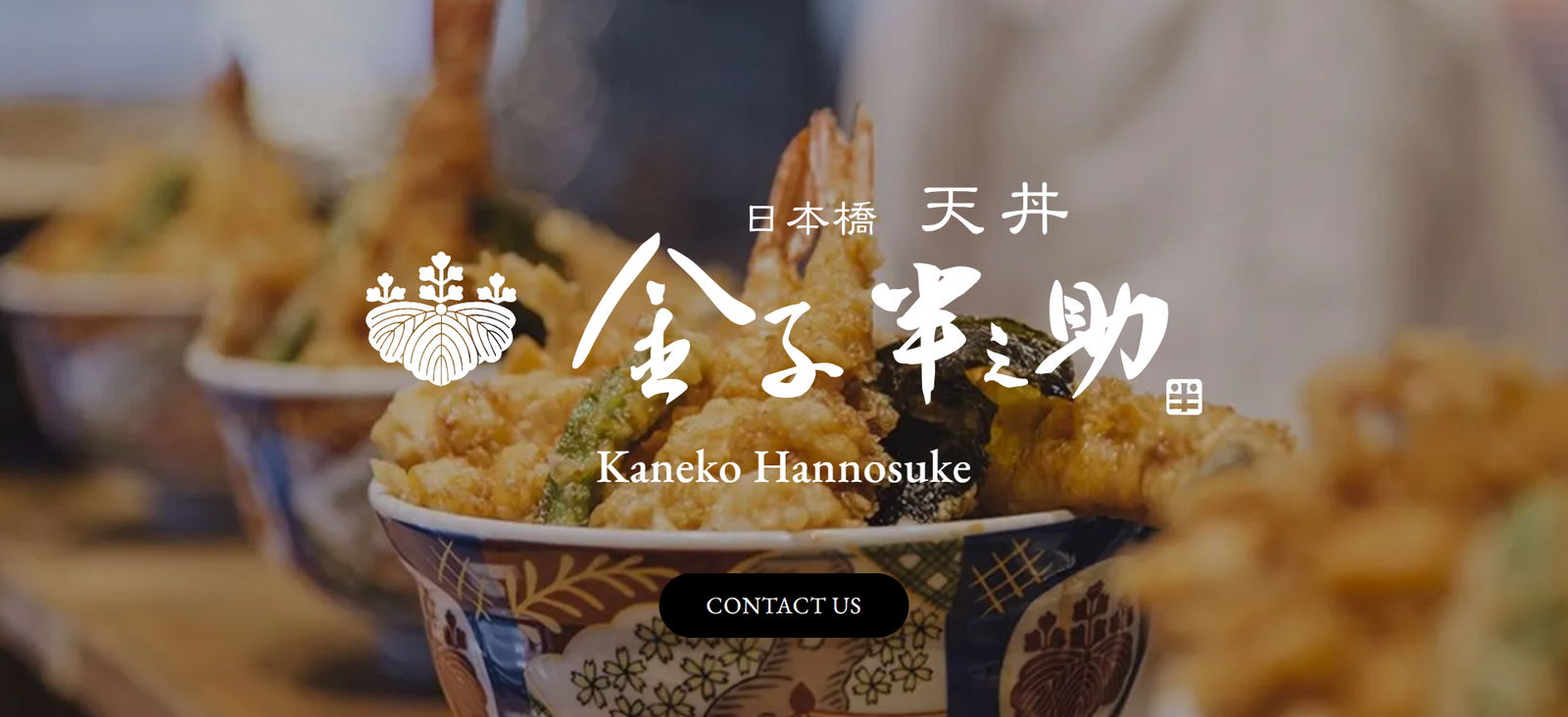
Kaneko Hannosuke is a Japan-born Edomae-style tendon brand with its flagship store in Nihonbashi, Tokyo, founded in 2010 and now operating 22 locations internationally across the USA, Canada, Taiwan, Hong Kong, Philippines, and Thailand. This page covers its overseas expansion status, key operational features, and franchise contract types for international operators.
Overseas Franchise
Expansion Status
| Products and Services Offered | Edomae (Tokyo-style) tendon (tempura rice bowl with conger eel, shrimp, and soft-boiled egg), tempura-meshi (tempura served with rice), and Inaniwa udon (thin wheat noodles) |
|---|---|
| Countries of Overseas Expansion | United States, Canada, Taiwan, Hong Kong, Philippines, and Thailand (as of January 2026) |
| Number of Overseas Locations | 22 locations (as of January 2026) |
| Franchise Contract Type | Master franchise / Area license |
From Nihonbashi to New York.
The Same Overflowing Bowl.
Kaneko Hannosuke, with its flagship store in Nihonbashi, Tokyo, is a brand that provides Edomae-style (Tokyo-style) tendon (tempura rice bowl). The brand is characterized by the aroma of sesame oil and its generous presentation that appears to overflow from the bowl.
In its overseas expansion, stores in regions such as the United States and Taiwan are recognized as venues where customers can experience authentic Japanese food culture. While positioned in a price range that reflects added value, the brand has built a stable customer attraction base.
Key Features of
the Overseas Franchise
The Presentation
That Justifies the Price. Instantly.
The bold presentation, including the signature whole-fried anago (conger eel) that overflows from the bowl, visually communicates a strong value-for-money proposition to customers.
This substantial volume serves as an element that justifies premium pricing, setting it apart from general Japanese fast-food outlets. By visualizing added value, the brand tends to shift the perceived value of the meal upward before the first bite.
Inherited from the Founder's Grandfather.
Hard to Follow.
The sweet and savory "secret sauce," said to be inherited from the founder's grandfather, is the core of the brand that integrates the tempura and rice. By centrally managing and supplying this sauce from the headquarters, it functions as a "black box" that prevents local competitors from imitating the flavor.
Furthermore, the unique experience of breaking the original hanjuku tamago (soft-boiled egg tempura) and mixing it with the sauce and rice creates a unique value that cannot be replaced by other restaurants. This memorable dining experience tends to give customers a reason to return — and something specific to describe to others.
Focus the Menu. Train in Days.
Open Anywhere.
By specializing the main menu in tendon, the brand has designed a simple procurement and cooking operation for its stores.
Limiting the ingredients and processes allows staff to concentrate on mastering tempura frying techniques, establishing an education system where even local staff can provide consistent quality in a short period. Additionally, the focused menu contributes to stabilizing the cost-of-goods ratio by minimizing food waste.
Reviews from Store Visitors
"The quality is on par with Japan standard. The yuzu ice cream is worth trying too."
"Staff were helpful and the food came quickly. A focused menu, all freshly made. The tempura egg was good."
"The menu is limited, which lets them focus on what they do. The tempura rice bowl is different from the traditional Japanese style — instead of a dipping sauce, the sauce is already embedded in the bowl, which makes the rice and tempura work together well."
"Signature rice bowl with varieties of tempura — boiled eggs, eel, prawn, squid. A different concept from other Japanese restaurants. Not a drop of oil on the rice."
"Known for its tendon selections, topped with conger eel, shrimp, squid, and a soft-boiled egg, drizzled in a flavourful secret sauce. The fruit juice in a transparent plastic can is also a nice touch."
Kaneko Hannosuke
Company Information
| Brand Name | Kaneko Hannosuke (Edomae Tendon Kaneko Hannosuke) |
|---|---|
| Company Name | Kaneko Hannosuke Co., Ltd. |
| Head Office Location | 1-11-2 Nihonbashi-Muromachi, Chuo-ku, Tokyo, Japan |
| Date of Establishment | November 2010 |
【Quick Poll】What's driving your interest in a Japanese food franchise?
※ Click to see how others voted.

Unique Enough to Protect.
The reason for the appreciated quality lies in focusing the menu and simplifying on-site cooking processes. The combination of flavor standardization through the "secret sauce" and the unique product of soft-boiled egg tempura enables operations that do not rely on artisan skills. This system maintains business reproducibility in multi-store expansion.
Limiting the menu directly leads to efficient ingredient management and reduced food waste. The shorter menu also tightens the gap between order and delivery. What this model does quietly is make the operation more predictable — and predictability, in a multi-location context, is harder to maintain than it looks. Whether that holds as the network moves further from the Nihonbashi flagship is, perhaps, the question worth sitting with.