

HACHIBAN RAMEN
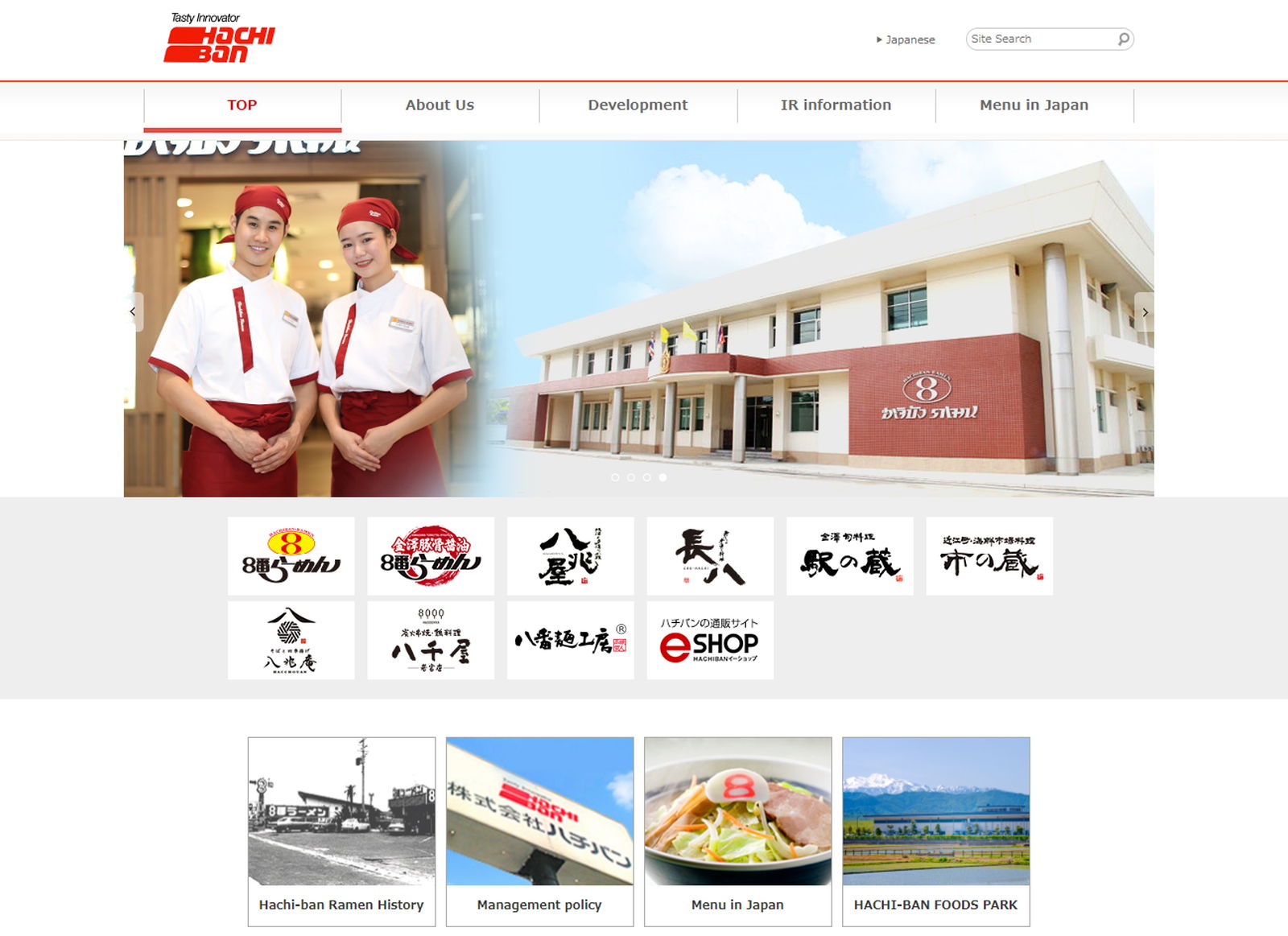
Hachiban Ramen is a Japan-born ramen brand founded in 1967, now operating 174 locations internationally. This page covers its overseas expansion status, key operational features, and franchise contract types for international operators.
Overseas Franchise
Expansion Status
| Products and Services Offered | Vegetable ramen; miso, salt, and soy sauce–based ramen; gyoza, and more. (Menus may vary by location.) |
|---|---|
| Countries of Overseas Expansion | Thailand and Vietnam (as of May 2025). |
| Number of Overseas Locations | 174 locations in total (171 in Thailand / 3 in Vietnam) (as of May 2025). |
| Franchise Contract Type | Area license agreement. |
https://www.hachiban.co.jp/business/abroad/
https://www.hachiban.co.jp/business/abroad/thailand/
https://www.hachiban.co.jp/business/abroad/vietnam/
A Roadside Ramen from 1967.
Now 171 Stores in Thailand.
The brand began in 1967 as a roadside restaurant along Japan's National Route 8, one of the country's major highways. Its signature vegetable ramen—topped with a generous serving of stir-fried vegetables and distinctive figure-eight thick noodles—has been loved for more than half a century as an everyday comfort food.
In April 1992, the first overseas restaurant opened at Silom Complex in Bangkok. As this Hokuriku-born ramen brand entered the Thai market, it adapted its noodles into a locally produced product using Thai wheat. In 2006, it completed a central kitchen capable of supporting a 200-store network.
In July 2019, the first Vietnamese restaurant opened in Ho Chi Minh City's Vincom Center. Guided by its founding belief that "great taste crosses borders," the brand has built a 171-store network across Thailand and is now extending that reach into Vietnam.
Key Features of
the Overseas Franchise
More Vegetables. Less Guilt.
A Different Kind of Ramen.
The flagship bowl, generously topped with boiled vegetables, stands out in local ramen markets where dishes tend to be higher in fat and salt. In Thailand, where street-food culture is deeply rooted, customers often say that "all the vegetables make it feel less guilty," while in Vietnam, early response to the gentler, home-style flavor has been encouraging.
Japanese Flavor. Thai Price.
That's the Infrastructure Behind It.
In Thailand, noodles and soup bases are produced centrally at the local central kitchen and delivered daily to 171 stores. This system reproduces Japanese recipes while using locally sourced ingredients, keeping import costs down and achieving both price competitiveness and stable quality.
The same approach has been adopted in Vietnam, streamlining ingredient logistics. As a result, many customers describe the brand as offering "Japanese flavors at local prices." Replicating this supply network at scale in Vietnam — where logistics infrastructure is still developing — remains one of the practical challenges as the operation grows.
Full Thai Menus. Full Thai Signage.
From Day One.
From its very first overseas store, the main target was not Japanese expatriates but local Thai customers. Signage and menus were fully localized into Thai, and even table-order illustrations were adapted for local use.
Thanks to this approach, the brand succeeded in gaining a loyal following among families and younger diners, and has firmly taken root despite being priced above typical street-stall food.
Reviews from Store Visitors
The reviewer says Hachiban Ramen is their favorite ramen restaurant in Bangkok. The noodles are described as very cheap and tasty, and the service is very good, although the restaurant only accepts cash and does not take credit cards.
The reviewer describes it as a typical chain-store flavor but says the prices are reasonable and the food is by no means bad. They recommend dishes with stir-fried toppings, such as miso ramen, gomoku ramen, and Cantonese-style noodles, and mention that portions are slightly smaller than in Japan, which makes it convenient when you just want a light meal.
Located next to BTS Ekkamai, this mall is described as a Japanese-style complex with many Japanese restaurants and a Japanese supermarket. The reviewer visited on a rainy day, tried Hachiban Ramen on the ground floor and found it nice and affordable, then browsed Tsuruha and the supermarket for Japanese goods.
The reviewer says this place is perfect when you crave Japanese ramen rather than Thai noodles. They ordered ramen and fried rice; portions were a bit small, but after eating only at hotel restaurants they were pleasantly surprised by how affordable it was. They describe it as a ramen shop with local Thai prices.
According to the reviewer, the taste is similar to a typical Japanese ramen shop, and prices are relatively reasonable. Since noodle portions in Thailand tend to be small, you may need to order several dishes to feel full, but ramen is under 100 baht and the gyoza is cheap and tasty. Compared with ramen places in Big C, they find this shop better value and note that it was packed with customers.
HACHIBAN RAMEN
Company Information
| Brand Name | HACHIBAN RAMEN |
|---|---|
| Company Name | HACHIBAN Co., Ltd. |
| Head Office Location | 1-12-18 Shinkanda, Kanazawa City, Ishikawa Prefecture, Japan |
| Date of Establishment | July 21, 1967 |
【Quick Poll】What's driving your interest in a Japanese food franchise?
※ Click to see how others voted.

That's the Moat.
Reading through the reviews, what emerges is not a "serious" Japanese restaurant reserved for special occasions, but a place people choose naturally when they are at the mall or catching a movie with friends. It has become part of everyday life rather than a once-in-a-while treat—and that, perhaps, is what makes the area-license model worth watching.