

Japanese Food Franchise Opening Process

When exploring an overseas Japanese food franchise, the steps you need to verify differ significantly depending on whether you're working with a local brand or one of Japanese origin. This article focuses on the process of partnering with a Japan-born franchise brand, walking through all eight steps from first inquiry to grand opening. Understanding the full process helps clarify what to look for at each stage.
※ This article is based on research conducted as of May 2026. Brand information and local regulations are subject to change. Please verify the latest details directly with each brand and local specialists.
The 8-Step Overview
The timeline below reflects the standard process when partnering with a Japan-born franchise brand. Details vary depending on the brand, target country, and property conditions. Please contact each brand directly for accurate timelines.
| Step | Phase | Overview |
|---|---|---|
| 01 | Research & Select Brand | Narrow down candidates based on category, investment scale, and global track record |
| 02 | Contact & Gather Info | Reach out to the brand's franchise team and obtain basic materials |
| 03 | Review & NDA | Sign an NDA and review the FDD and contract terms in detail |
| 04 | Visit & Experience Brand | Visit the brand's home country headquarters to observe operations firsthand (optional) |
| 05 | Agreement & Territory Setup | Finalize the letter of intent or area license agreement |
| 06 | Preparation & Market Study | Secure a site, establish supply routes, and address local regulations in parallel |
| 07 | Training & Setup | Complete headquarters training, install equipment, and prepare staff for operations |
| 08 | Grand Opening & Promotion | Launch with advertising and tasting events to drive early-stage awareness |
Each Step in Detail
Research & Select Brand
The first step is narrowing down candidates by evaluating food category (ramen, yakiniku, sweets, etc.), investment scale, local market demand, and the brand's global expansion track record. Brands with a presence across multiple markets tend to have more developed support systems covering training, ingredient sourcing, and local regulatory compliance. The overseas expansion data for Japan-born brands featured on this site is summarized below.
| Brand | Category | Number of Overseas Locations | Key Markets |
|---|---|---|---|
| Yoshinoya | Gyudon (Beef Bowl) | 1,035 locations (As of December 2025) |
USA, China, Indonesia, Philippines, Thailand, Singapore, etc. |
| Marugame Udon | Udon & Soba | 271 locations (As of June 2024) |
USA, UK, Indonesia, Philippines, Taiwan, Cambodia, Vietnam, etc. |
| Pepper Lunch | Teppan / Steak | 370 locations (As of June 2025) |
Indonesia, Thailand, Philippines, China, Singapore, Hong Kong, Australia, USA, Canada, etc. |
| Hachiban Ramen | Ramen | 174 locations (As of May 2025) |
Thailand, Vietnam |
| Beard Papa's | Sweets / Dessert | Over 220 locations (As of February 2025) |
USA, China, Taiwan, Thailand, Philippines, Indonesia, etc. |
| CoCo Ichibanya | Curry | 216 locations (As of February 2025) |
USA, UK, China, Taiwan, South Korea, Thailand, India, Singapore, etc. |
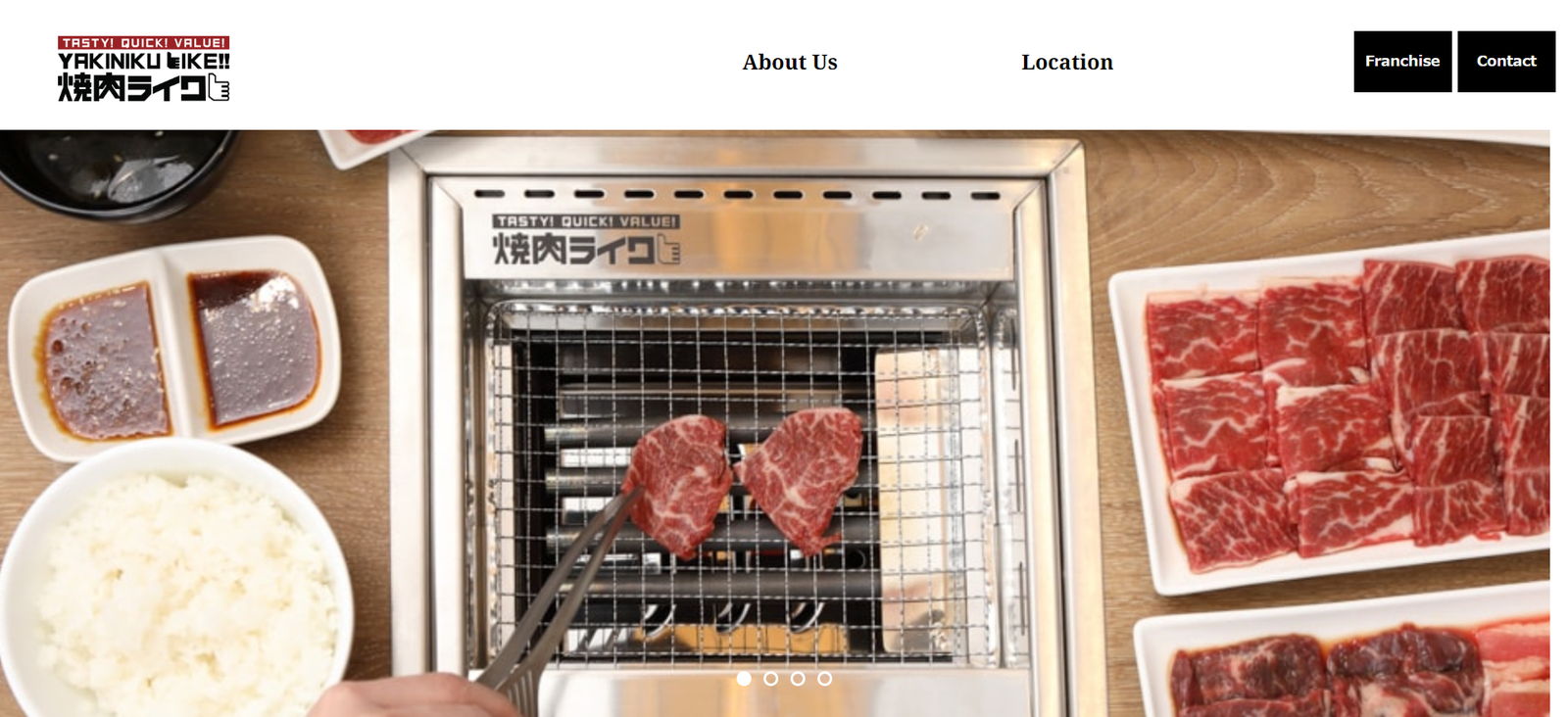
| Yakiniku Like | Yakiniku | 130 locations (As of December 2025) |
Indonesia, Hong Kong, Thailand, China, Singapore, Taiwan, Philippines, UK, Australia, etc. |
| Gatten Sushi | Sushi | Approx. 50 locations (As of January 2026) |
China, South Korea, Taiwan |
* This table includes a selection of brands featured on this site. Compiled from each brand's official website and IR materials. Location counts and markets reflect different reporting dates. Please refer to each brand's page for the latest information.
Contact & Gather Info
This step involves reaching out to the franchise team of your shortlisted brands and requesting basic materials — an overview document, investment summary, or franchise prospectus. At this stage, there is no obligation of any kind. The speed of response, language support, and the specificity of materials provided all serve as indicators of how a brand approaches its international partners.
Pepper Lunch operates an Applicant Portal where prospective franchisees can explore the brand, watch video presentations, and download materials before making formal contact — making it possible to arrive at that first conversation already well-informed.
Review & NDA
After signing a mutual NDA (non-disclosure agreement), you gain access to the FDD (Franchise Disclosure Document) and detailed contract terms. This is where you review franchise fees, royalties, territory rights, and support commitments. Disclosure requirements vary significantly by country. In the United States, Canada, and Australia, franchisors are legally required to provide disclosure documents — giving prospective franchisees access to financial records and historical contract data. In markets where disclosure is not legally required, many globally active Japanese food franchises provide these materials voluntarily. Please refer to the cost page for a breakdown of estimated initial investment by category.
| Country / Region | Disclosure Requirement | Overview |
|---|---|---|
| USA | Required | The FTC Franchise Rule requires franchisors to provide an FDD. Delivery is required at least 14 days before signing or payment. |
| Canada | Required (6 provinces) |
Franchise disclosure is mandatory in Alberta, British Columbia, Manitoba, New Brunswick, Ontario, and PEI. Delivery is required at least 14 days in advance. |
| Australia | Required | Under the Franchising Code of Conduct, franchisors must provide a disclosure document at least 14 days before signing. Registration with the ACCC is also required. |
| Asia (Thailand, Malaysia, etc.) |
Not required (voluntary) |
There is no franchise-specific disclosure obligation in most Asian markets; general contract law applies. Whether the brand voluntarily prepares disclosure materials becomes a key evaluation point. |
* Disclosure requirements are based on the laws of each country. Please consult a local specialist for the latest regulatory details.
Reference: FTC Franchise Rule (https://www.ftc.gov/legal-library/browse/rules/franchise-rule) / ICLG Franchise Laws Canada (https://iclg.com/practice-areas/franchise-laws-and-regulations/canada) / ACCC Franchising Code of Conduct (https://www.accc.gov.au/business/industry-codes/franchising-code-of-conduct)
Visit & Experience Brand
This step involves visiting the brand's home country to observe kitchen operations and get a direct sense of the team culture and brand philosophy. Not all brands require this, but it offers a chance to verify aspects of the brand that documents and numbers alone cannot convey. Use the visit to assess the quality of training materials, the presence of a dedicated international support team, and whether the brand's direction is one you can commit to over the long term. Comparing the impressions formed through earlier correspondence with what you observe in person helps clarify whether this is a brand you'd want as a long-term partner.
Agreement & Territory Setup
Once you are ready to move forward, this step involves formalizing the partnership through a contract. Japan-born brands operating internationally typically use one of the following contract structures. Each carries different rights and obligations, so it is worth confirming which structure aligns with your planned scale of operations.
| Contract Type | Overview | Key Characteristics | Representative Example (Example Brand) |
|---|---|---|---|
| Master Franchise Agreement | Acquires the rights to an entire country or region, including the right to sub-franchise to other operators | Comes with broad territorial rights, typically paired with minimum development obligations | Pepper Lunch |
| Area License Agreement | Grants rights to operate multiple locations within a defined territory, without sub-franchising rights | Lower barrier to entry than a master agreement; typically includes territorial exclusivity alongside development commitments | Gyu-Kaku |
| Area Development Agreement | Grants the right and obligation to develop a set number of locations within a defined period | Common among brands that require cluster expansion — opening multiple locations within the same market | Marugame Udon |
| Single-Unit Franchise Agreement | A contract for one location at a time, with no territorial rights | Lower entry cost, though other franchisees may enter the same area | Beard Papa's (North America) |
* Representative examples are for reference only. Each brand may use multiple contract structures depending on the market and timing. Compiled from each brand's official materials and FDDs. Please contact each brand directly for details.
Preparation & Market Study
Among the eight steps, this one involves the most moving parts — securing a site, establishing supply routes, and addressing local regulations all run in parallel. Japanese food franchises often require market-specific preparation due to the nature of ingredients and cooking methods. The specifics vary considerably by country, so the earlier these requirements are identified, the smoother the preparation process tends to be. Note that the three markets below are those covered in detail on this site; actual challenges will differ depending on the target country.
| Country / Region | Market-Specific Challenges in Site Preparation | How Japan-Born Brands Have Responded |
|---|---|---|
| USA | Categories requiring exhaust systems — such as ramen and yakiniku — must comply with fire codes covering ventilation and exhaust equipment, which significantly affects interior and equipment costs. | Some brands have developed equipment packages and certified supplier networks designed to meet US regulatory requirements from the outset. |
| Thailand | Importing Japanese ingredients incurs tariff costs. The decision to switch to local sourcing or maintain Japanese-quality ingredients directly affects the scale of initial supply infrastructure investment. | A growing number of brands have established local central production facilities or developed localization strategies using alternative ingredients while preserving quality standards. |
| Malaysia | Brands targeting the large Muslim consumer base must obtain Halal certification and build a dedicated ingredient sourcing system that eliminates pork and alcohol. | Some brands have developed Halal-compliant formats, including chicken-based menu adaptations and established relationships with certified suppliers. |
Training & Setup
This step covers headquarters training, equipment installation, interior build-out, and staff onboarding. Pre-opening preparation tends to show up in the numbers faster than most operators expect. In addition to training itself, it is worth confirming what support the brand offers for local staff recruitment and operational handover after training ends. Many globally active Japan-born brands publish their training programs in detail on their official websites.
| Brand | Training Duration | Training Location | Opening & Post-Opening Support |
|---|---|---|---|
| Pepper Lunch | 6 weeks | Los Angeles or designated location | Up to two headquarters staff members are deployed on-site for the first restaurant opening, covering food preparation, customer service, and equipment management |
| Beard Papa's | 5–7 days + 5 days (2 phases) | Certified training store → franchisee's own store | An OPS Director and certified trainer are on-site at the franchisee's store for 5 days, supporting the soft open through grand opening |
| Gyu-Kaku | Pre-opening on-site training | Franchisee's location (HQ staff travel to the site) | Headquarters staff are present on grand opening day. Ongoing training continues after opening on a regular basis |
| Marugame Udon | 4–6 weeks | Certified training store (domestic or international) | Ongoing coaching from headquarters continues after opening, including follow-up support for operational improvements |
Reference: Pepper Lunch official website (https://www.pepperlunchrestaurants.com/franchise) / Beard Papa's official website (https://www.beardpapas.com/franchise) / Gyu-Kaku official website (https://www.gyu-kaku.com/franchise/) / Marugame Udon Canada official website (https://ca.marugame.com/franchise/)
Grand Opening & Promotion
This step involves running advertising, tasting events, and social media campaigns to build early awareness and drive the initial wave of customers. What happens in the first weeks tends to travel — both in reviews and in word of mouth. Before signing, confirm the scope of opening support the brand provides — including staff deployment and marketing materials.
Japan-born brands carry a built-in "authentic Japanese" positioning that can be leveraged in opening marketing. Collaborations with local food influencers and bloggers, alongside tasting events that let customers experience the look, aroma, and cooking process firsthand, are approaches that work well with this positioning. It is also worth confirming in advance what opening marketing assets — images, videos, social media templates — the brand makes available to franchisees.
The first three months after opening are when early customer retention is truly tested. Confirming the brand's post-opening follow-up frequency and quality monitoring process before signing helps lay the groundwork for stable long-term operations.

Two hesitations come up almost every time I talk to someone early in the process — fees, and whether Japanese will be a barrier. On the cost side, estimated figures by category are available on the cost page and through each brand's public materials — so it's possible to get a rough sense of the numbers before making contact. On the language side, brands that have invested seriously in global expansion tend to have English-speaking franchise teams in place.
The questions worth bringing to that first call are exactly the ones people tend to hold back on. How clearly and promptly the brand responds is itself one of the best indicators of what the partnership will look like.