

Tonkatsu Shinjuku Saboten
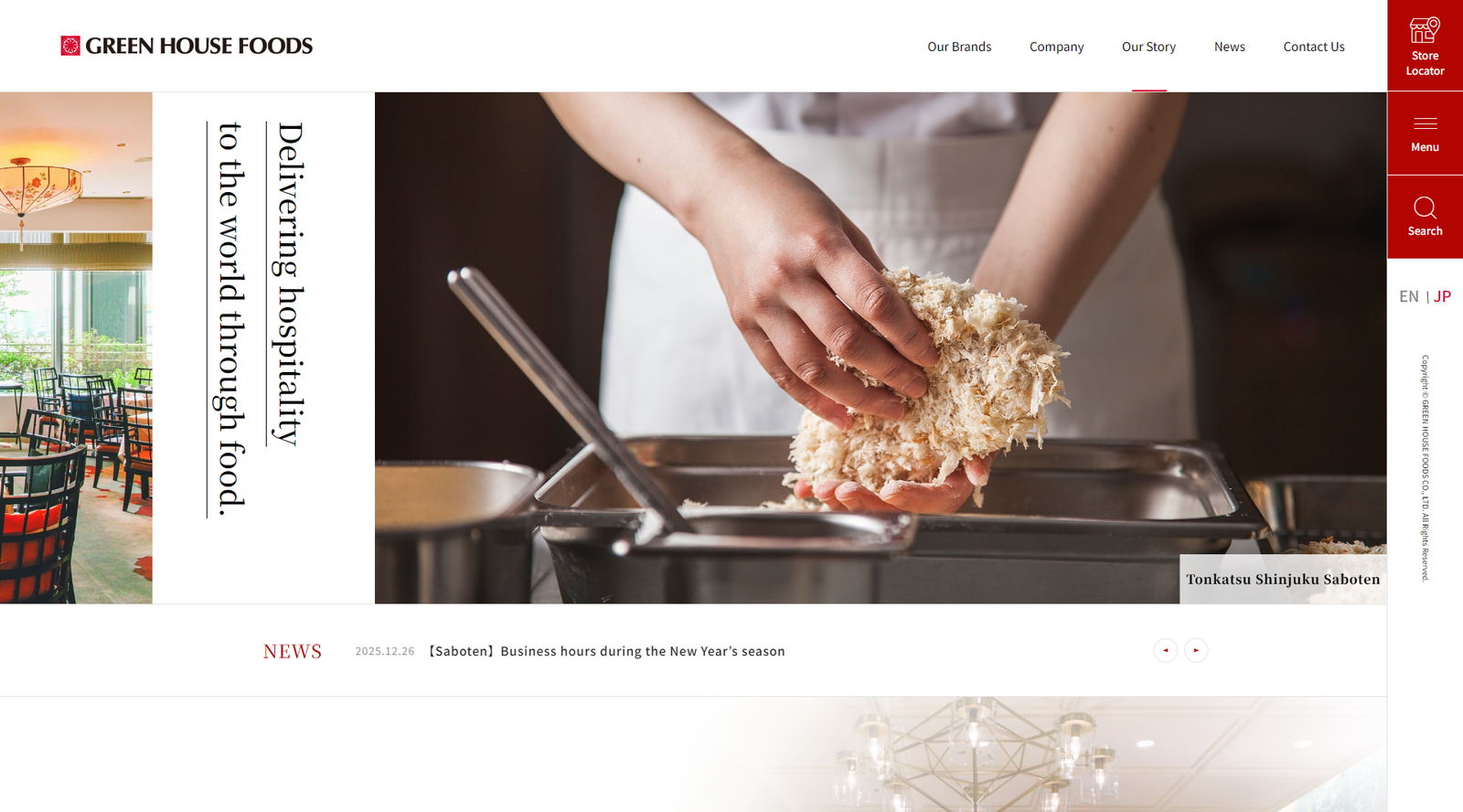
Saboten is a long-established Japan-born tonkatsu brand founded in 1966, now operating over 100 locations internationally. This page covers its overseas expansion status, key operational features, and franchise contract types for international operators.
Overseas Franchise
Expansion Status
| Products and Services Offered | Freshly fried Tonkatsu, Katsu Sando (sandwiches), Curry, Bento boxes, etc. |
|---|---|
| Countries of Overseas Expansion | Canada, China, South Korea, Taiwan, Hong Kong, Thailand, Singapore, Philippines (As of May 2025) |
| Number of Overseas Locations | Over 100 stores (10 regions, as of May 2025) |
| Franchise Contract Type | Primarily Master Franchise. Strategic alliance with OUR HOME in South Korea; joint venture agreements with local companies in China and Taiwan. |
50 Years of Craft.
Systemized for Scale.
Established in Shinjuku, Tokyo in 1966, "Saboten" is a long-established tonkatsu brand with a history spanning nearly six decades, now present across 10 regions worldwide. Beyond merely riding the wave of the Japanese food boom, the brand has continued its efforts to root the "TONKATSU" category itself in local markets.
Starting with its expansion into South Korea in 2001, the brand now operates over 100 stores, primarily in Asia and North America. The systemization of specialty techniques cultivated over half a century creates a structure that has delivered consistent quality across the 10 regions where the brand operates. This system serves as a major foundation supporting multi-store expansion.
Key Features of
the Overseas Franchise
The Breadcrumb
That Replaces the Chef.
A major feature of Saboten is the use of original "Nama-Panko" (fresh breadcrumbs) produced in designated factories, rather than generic dry breadcrumbs.
Using these moisture-rich breadcrumbs improves oil drainage and helps maintain a crispy texture over time. This quality control is the brand's identity, enabling high-quality cooking without relying on skilled artisans. This supply network is difficult to rebuild from scratch — and that, perhaps, is what makes it a stable foundation for the brand.
Sell the Health. Keep the Premium.
Even in overseas stores, the system of "unlimited refills" for shredded cabbage is standardized. The style of consuming a large amount of vegetables before fried foods creates an impression of "healthy Japanese cuisine" among health-conscious demographics.
This shapes how customers perceive the meal — and plays a part in why the brand holds a price point noticeably above typical local options.
We Bring the Tonkatsu.
You Bring the Scale.
The strategy involves concluding franchise or joint venture agreements with major companies representing the food industry in each country. By having partners familiar with local business customs and distribution handle operations, the brand achieves both the maintenance of Japanese quality (technology transfer) and adaptation to local food cultures.
This partnership model has helped the brand navigate local complexity in each market and has been the driving force behind the growth to a scale exceeding 100 stores as of 2025. Finding partners who combine local market knowledge with genuine commitment to Japanese quality standards remains the defining challenge for each new market entry.
Reviews from Store Visitors
"I am always on the hunt for tasty tonkatsu. And saboten doesn't disappoint. The pork is very tasty and crispy."
"The unlimited refill of shredded cabbage, soup, side dishes and rice really sets the deal with this restaurant. The breaded chicken, shrimp and pork tastes awesomely good. The crab cakes was also delicious."
"Consistently excellent food, cooked and served by wonderful and highly professional staff made us feel safe and at home at the first of our now many visits. Bravo!"
"Staff were extremely helpful explaining how to mix the sauces. The lunch was great and something we've not eaten before."
"The food here was as good as the last time we were here a few years ago. We loved the sauces for our cabbage!"
Tonkatsu Shinjuku Saboten
Company Information
| Brand Name | Tonkatsu Shinjuku Saboten |
|---|---|
| Company Name | Green House Foods Co., Ltd. |
| Head Office Location | Tokyo Opera City Tower 17F, 3-20-2 Nishi-Shinjuku, Shinjuku-ku, Tokyo |
| Date of Establishment | February 20, 1959 |
【Quick Poll】What's driving your interest in a Japanese food franchise?
※ Click to see how others voted.

Is the Standard.
The highly praised "crispy texture" and exceptional service quality are direct results of a proprietary fresh breadcrumb supply and systemized operations. Attentive customer engagement, such as guiding patrons on sauce preparation, builds familiarity with each visit — and, from the reviews, customers do come back.
What stands out is that the system — the breadcrumb, the supply network, the partnership model — may matter more than any single market. Whether that holds as the brand moves into less familiar regions is, perhaps, the more interesting question.