

Ramen Franchisor

Japanese ramen franchises
winning hearts around the world
Overseas expansion of Japanese ramen brands
When it comes to overseas expansion, most Japanese ramen brands are currently concentrated in North America and Southeast Asia. In Southeast Asia, they tend to grow by opening multiple outlets in shopping malls and similar high-traffic locations, while in North America and Europe they usually start in major cities before gradually expand into surrounding areas. These are the two main patterns we see.
Recent developments—such as Kagetsu Arashi’s first store opening in Europe and Machida Shoten’s continued growth in mainland China—show that brands are still entering new countries and new regions. With many markets still untapped, this expansion trend is expected to continue.
Startup costs and barriers to entry
Capital requirements vary by brand, but as a general rule, the initial investment is higher than for dessert or café franchises. However, because ramen operations are simpler than those of concepts such as conveyor-belt sushi or izakaya-style pubs, ramen typically falls into the “mid-range” for upfront capital.
Another advantage for owners is ramen’s strong investment efficiency. Each order is a complete meal in one bowl, customer turnover is relatively quick, and both recipes and quality can be replicated consistently across multiple locations.
Key success factors
Noodles as a category already enjoy strong global demand, making ramen an inherently attractive segment.
As more people around the world become accustomed to noodle dishes at home and as Japanese restaurants become more widespread, a solid base of consumers now actively seeks out authentic ramen when dining out.
Ramen also benefits from the ability to communicate its value through a single signature bowl, and the appeal of an authentic Japanese brand serves as a compelling marketing story. Because ramen formats work well in high-traffic locations such as shopping malls, the concept is relatively easy to launch—even in new countries.
Japanese ramen franchisor
This section introduces Japanese ramen franchisors: ramen brands that already have a proven track record with franchise operations. For each brand, we summarize its current store footprint, key characteristics of the franchise model, brand story, and user reviews from different countries.

HACHIBAN RAMEN
HACHIBAN RAMEN traces its roots back to a legendary roadside shop that opened in 1967 along Japan’s National Route 8, one of the country’s major highways. For more than half a century it has been loved as an everyday taste by local customers. Today, its presence is growing overseas as well, particularly in Thailand and Vietnam.

TAKÉ-SAN
"Takesan" offers authentic miso ramen from a 245-year-old brewery, served in hot clay pots. Their franchise strength lies in high-margin vegan options and a scientific kitchen system. Successfully operating in Paris and Mongolia, they deliver genuine Japanese culture through in-house design.
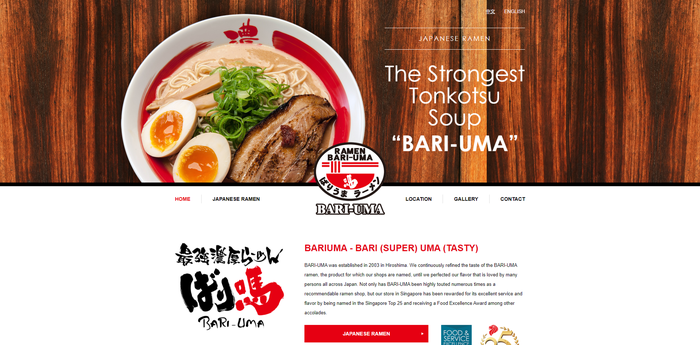
Bariuma
"Bari-Uma" offers Japan's richest tonkotsu shoyu ramen, originating in Hiroshima. Its successful franchise model combines high-quality retort soup shipped from Japan with cost-effective, locally made noodles. Anchored by a showroom in Singapore, the brand has expanded to Malaysia, Indonesia, and China, now accelerating globally under Yoshinoya Holdings.