

Go Go Curry
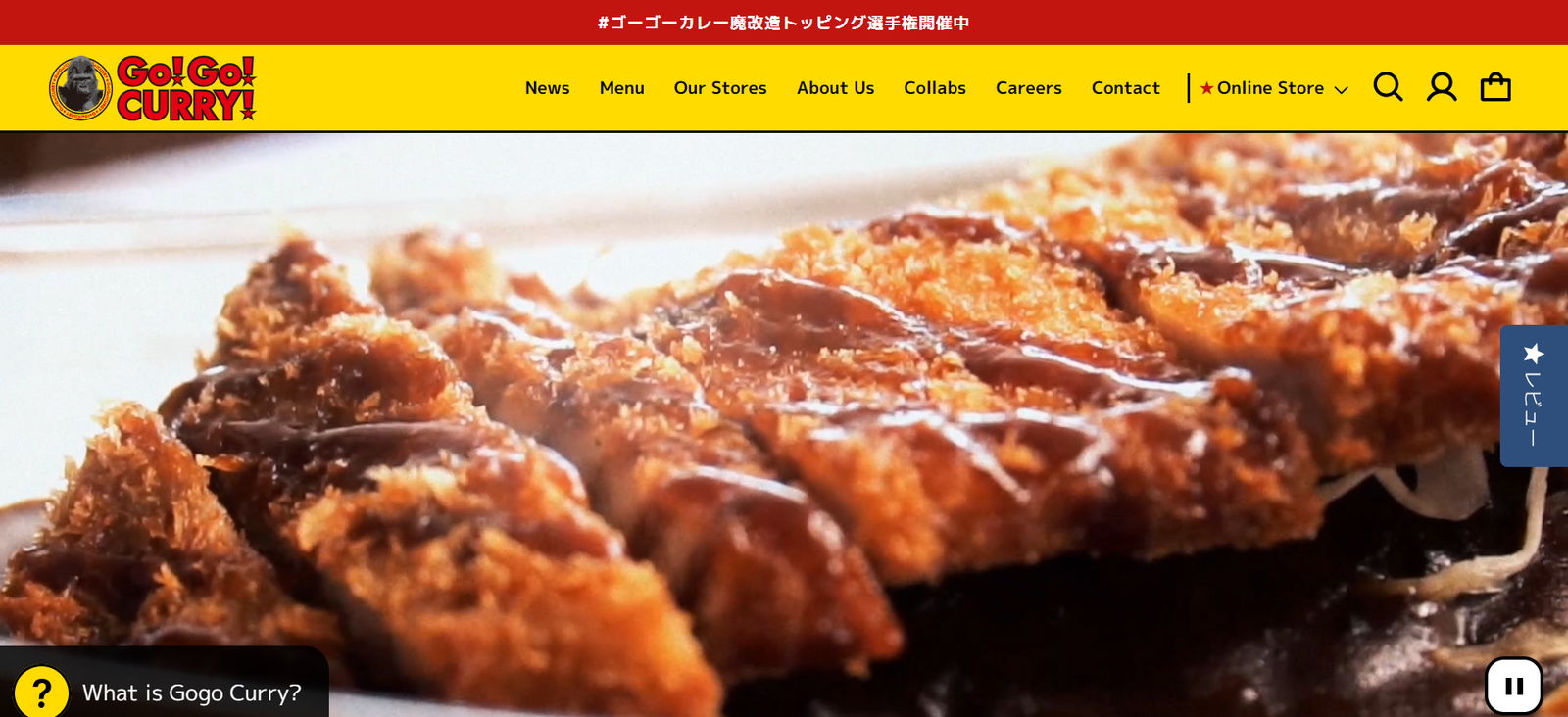
Go Go Curry is a globally recognized Japan-born Kanazawa curry brand founded in 2003, now actively expanding its authentic and rich curry experience into international markets. This page covers its overseas expansion status, key operational features, and franchise contract types for international operators.
Overseas Franchise
Expansion Status
| Products and Services Offered | Kanazawa Curry (Loin Katsu Curry, Chicken Katsu Curry) and various toppings. |
|---|---|
| Countries of Overseas Expansion | USA, Indonesia (As of January 2026) |
| Number of Overseas Locations | 26 stores (Indonesia: 21, USA: 5 *As of January 2026) |
| Franchise Contract Type | Directly Managed, Franchise, and Local Partnerships |
The Kanazawa Standard.
New York to Jakarta.
Go Go Curry, which introduced Kanazawa Curry from Ishikawa Prefecture to the world, rapidly gained international recognition after opening its Times Square location in New York in 2007. The distinctive style—rich dark roux, stainless steel plates, shredded cabbage, and eating with a fork—has made a strong impact on local customers, being embraced as a form of entertainment that transcends typical Japanese cuisine.
In recent years, the brand has accelerated its expansion into the Indonesian market, operating 21 stores as of January 2026. By establishing a Halal-certified model that respects local religious backgrounds, the brand has established a growing presence in the Asian market.
Key Features of
the Overseas Franchise
Complexity in the Kitchen.
Simplicity in the Store.
The signature rich roux is produced through a proprietary method involving 55 steps, five hours of simmering, and 55 hours of maturation. This complex process is managed centrally in a central kitchen, which supplies the finished roux to each store.
Since store-level operations are simplified to "frying and serving," there is no need for skilled chefs. This system lowers the barrier for recruitment while ensuring that the "authentic taste" is consistently reproduced in any country.
Visual Impact.
The Gorilla Needs No Translation.
The gorilla logo and vibrant yellow brand color function as visual identifiers that transcend language in overseas markets. The high visibility — where customers recognize it as "that gorilla curry shop" even if they cannot read the name — tends to generate word-of-mouth without relying on conventional advertising spend.
Furthermore, the simple concept of providing "Energy" resonates with busy urban professionals and students as a "power lunch," offering universal value that crosses borders.
Halal Infrastructure
Scales Across Borders.
While establishing Japanese-style Katsu Curry as a new genre in the North American market, the brand developed a dedicated pork-free menu for Indonesia, which has a large Muslim population.
Beyond just swapping ingredients, the brand built a robust supply chain by establishing a dedicated Halal-certified factory in Japan and exporting the curry roux from there. The ability to develop products that adapt to local dietary habits without losing the "richness and punch" characteristic of Kanazawa Curry supports multi-store expansion across different cultures.
Reviews from Store Visitors
"Stopped here on a whim and wasn't disappointed. The chicken Katsu curry was tasty. The curry sauce, while not spicy, packed a flavorful punch."
"I come here once a week for lunch. A small katsu is plenty for a good meal. Larger sizes = more rice, same amount of meat. I don't get tired of eating here. "
"We went here with some friends last night and could help but share how amazing it is. The food is fast fresh and fantastic. Really cant wait to go again. We shared fried pork with rice and shrimp. "
"Tasted this curry during a leisure trip to New York ! Restaurant is very simple and small ! There is no toilet ! But it was clean and Service was very good ! Prices are very reasonable ! Curry taste very good ! Very similar to what is found in Japan !"
"Tried Japanese curry for the first time and it was delicious. The plates are large enough to share, and the complexity of the different items work well together. "
Go Go Curry
Company Information
| Brand Name | Go Go Curry |
|---|---|
| Company Name | Go Go Curry Group Co., Ltd. |
| Head Office Location | 89-1 Imachi, Kanazawa-shi, Ishikawa, Japan |
| Date of Establishment | May 5, 2004 |
【Quick Poll】What's driving your interest in a Japanese food franchise?
※ Click to see how others voted.

Reproducible Operations.
Reviews mention returning weekly for lunch — not as a special occasion, but as a rhythm. That kind of visit pattern tends to say something about the consistency of the experience rather than its novelty. The 55-step roux, produced centrally and distributed to each location, may be what underpins that reliability.
The Halal-certified factory model — producing roux in Japan for export to Indonesia — is structurally unusual for a chain of this scale. That the same product can reach both New York and Jakarta from a single production source, while meeting both markets' requirements, is perhaps the detail worth sitting with.