

Hachiban Ramen in Thailand: A Case Study in Long-Term Market Localization
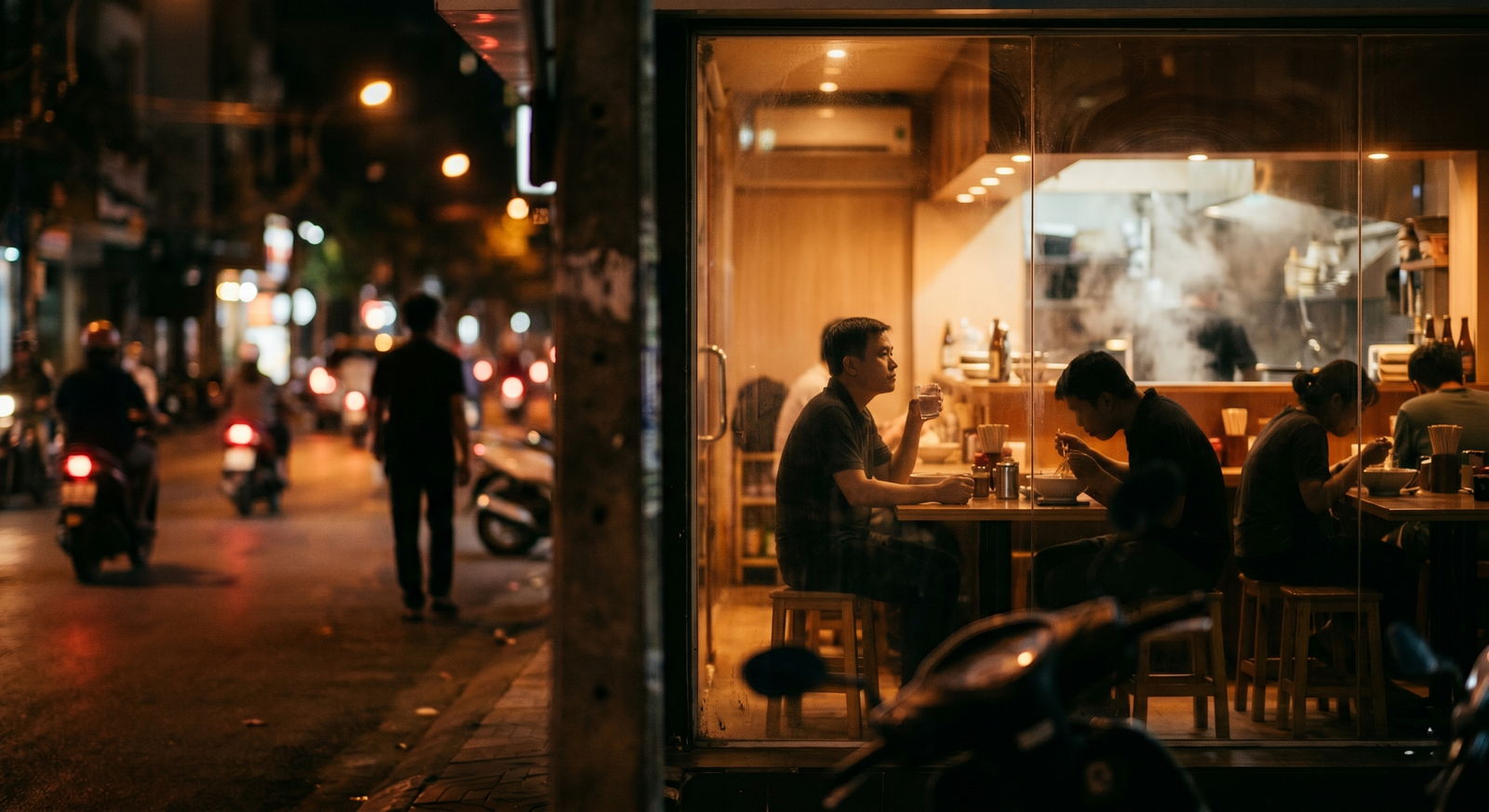
"Japanese ramen? Nah, that's a Thai thing." When Bangkok's younger generation says this, they're talking about HACHIBAN RAMEN. Open since 1992 and now operating 171 locations across Thailand (as of 2025), the brand has become a fixture in everyday Thai dining.
The Price Nobody Else Would Choose — and the Resolve Behind It
Most Japanese food chains in Thailand price their bowls at 200–300 baht. Local eateries charge 50–60 baht, so a premium on Japanese food seems natural. HACHIBAN RAMEN chose a different path.
From day one, the brand set its baseline at around 100 baht — and has held to it ever since. But staying affordable isn't just about charging less. At that price, you need consistent foot traffic, enough locations, and — critically — control over ingredient costs. This pricing was built for multi-location scale from the start.※1
Why They Built a Factory in Thailand in 1997 — at the Height of the Financial Crisis
In most overseas expansions, a dedicated production facility gets built after store count grows and revenue stabilizes. The capital outlay requires scale to justify it.
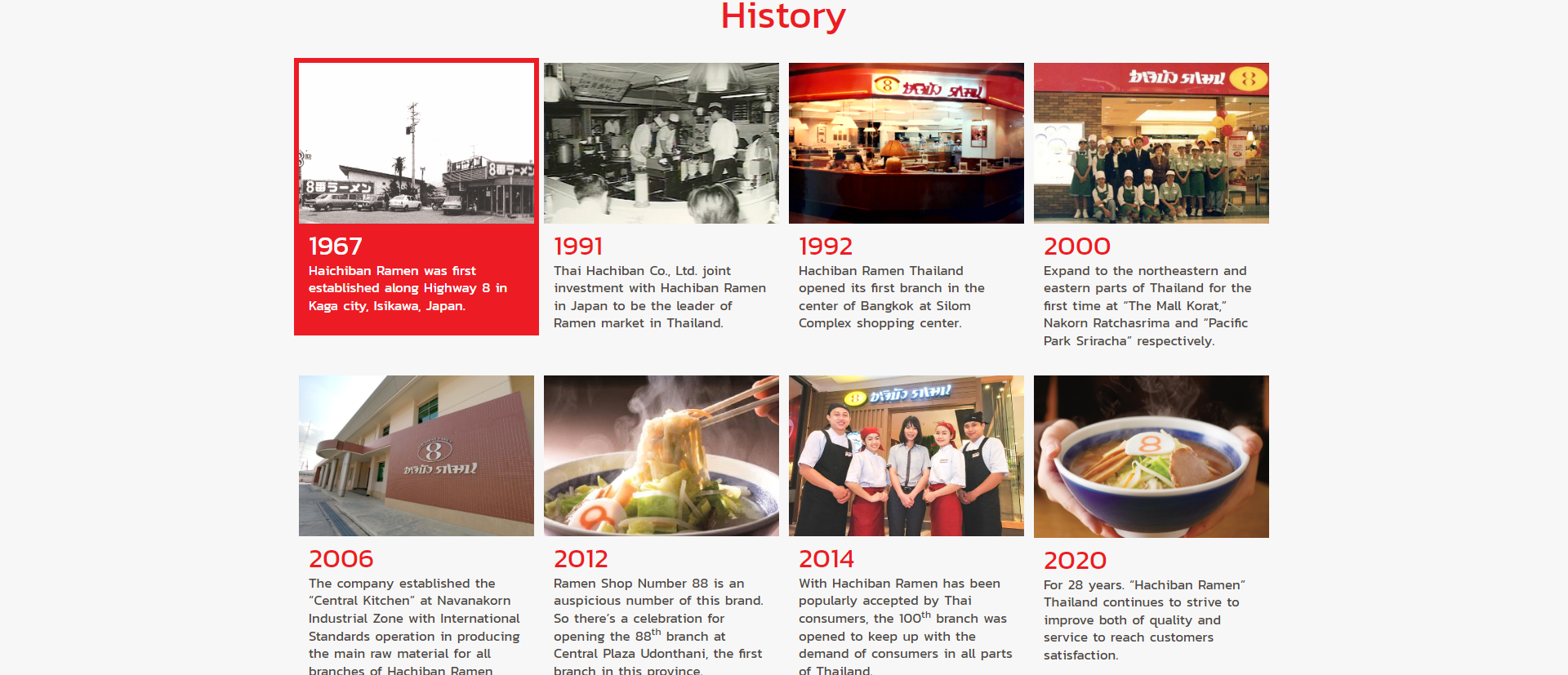
HACHIBAN RAMEN's story went differently. In 1997, Thailand was deep in the Asian financial crisis. Most companies froze investment or pulled out entirely. Instead, the brand set up a separate Thai company — DFC — to manufacture its soups and seasonings.※2 That became the starting point for the supply infrastructure now serving all of Thailand. The decision to keep investing paid off — and that commitment is what made the brand what it is today.
That level of upfront investment meant the Thailand operation took six to seven years to turn a profit.※1 The Japanese parent company and local partners absorbed those costs deliberately — as an investment few rivals were willing or able to make at the time. The result: a supply foundation that took years to build — one that competitors have not yet matched at the same scale.※2※3
※3 Reference : Thai Hachiban Co., Ltd. Official Website — History (https://www.hachiban.co.th/en/history/)
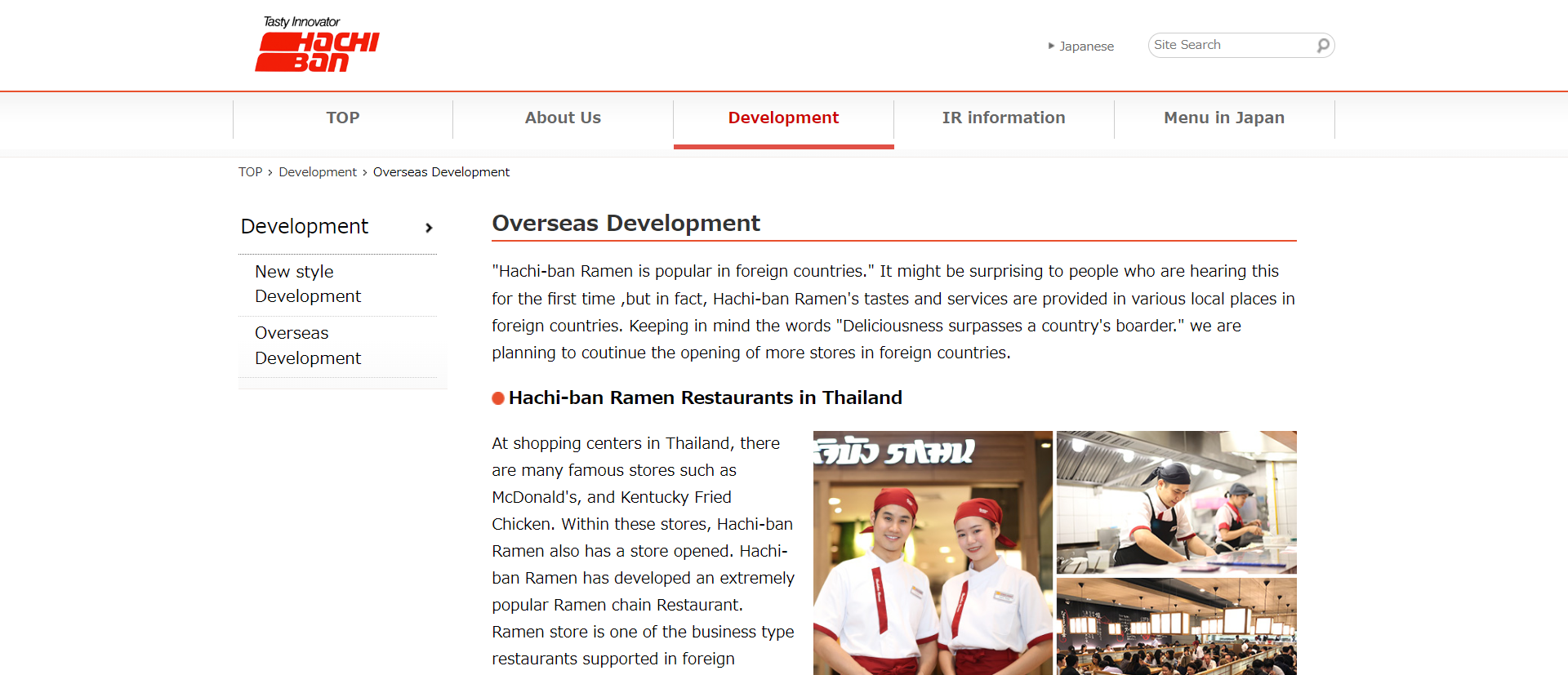
Why HACHIBAN RAMEN Did Not Scale Back — Even During the Pandemic
In 2021, Thai authorities banned indoor dining in Bangkok entirely and imposed strict capacity limits. Many Japanese food chain operators scaled back or suspended operations. HACHIBAN RAMEN did not. Strong management, yes — but the real answer lies in the two structural advantages already described.
The 100-baht price point became the last dining option middle-income households held onto as budgets tightened. At the same time, the in-house production system built locally — built through years of investment during ordinary times — shielded stores from supply chain disruptions and rising import costs.※1※2 Resilience isn't built during a crisis. It's built before one. That preparation — rather than the crisis response itself — tells you something about how this brand is built.
What Happened in Thailand Has Not Happened Yet in Your Country
HACHIBAN RAMEN entered Thailand in 1992. Ramen culture barely existed in Bangkok at the time — there was no certainty a market existed at all. The Japanese parent and local partners took that risk. The result is 171 locations today.※3
Thailand is an established market. Vietnam is only in its early stages. Across much of Southeast Asia, the brand has yet to establish a presence. What took decades to build in Thailand hasn't started yet in most of these markets.
About Franchise Participation
HACHIBAN RAMEN's overseas expansion runs on an area license model. A local owner or entity becomes the area licensee and operates the chain within a defined territory. In Thailand, a three-way joint venture among a Thai investor, Itochu Corporation, and Hachiban runs all locations — a structure distinct from individual store-level agreements.※1
For those considering a new market, the starting point is reaching out to Hachiban's overseas business division. The brand is looking for partners ready to open a market in their own country — backed by infrastructure and a brand that have already proven themselves.

When evaluating an overseas franchise investment, near-term margins get most of the attention. But what this story demonstrates most clearly is that someone has already absorbed the risk of building the market. Decades of losses and trial-and-error — through the Asian financial crisis and a global pandemic — produced the supply system that exists today. What was built in Thailand doesn't have to be rebuilt from scratch in the next market — and that, perhaps, is the point.
A closer look at HACHIBAN RAMEN's franchise
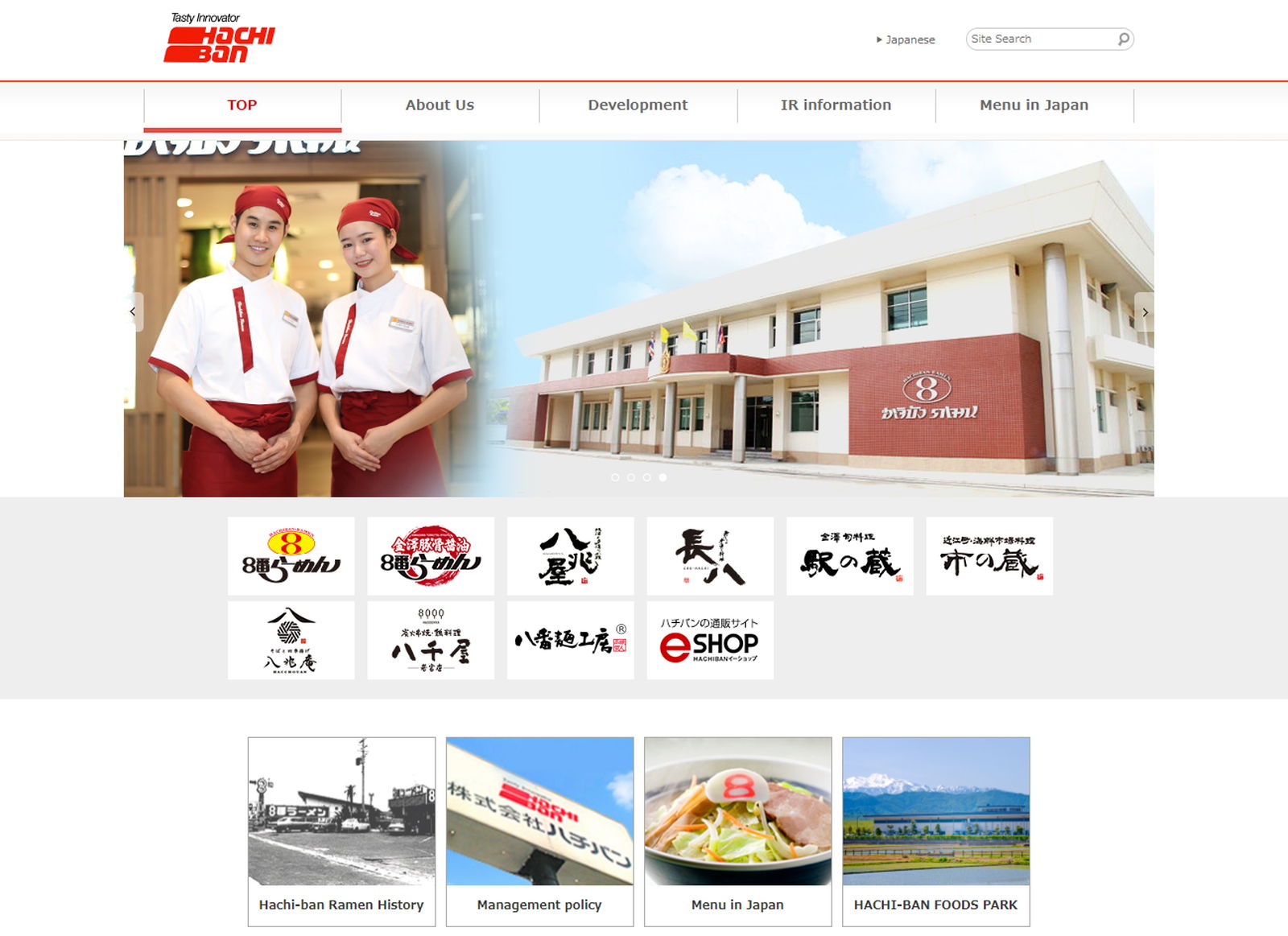
HACHIBAN RAMEN
For those interested in HACHIBAN RAMEN's overseas franchise opportunities, detailed information is available on the official website and franchise recruitment pages. There you can find information on the area license model, support structures, and how to take the first step toward bringing the brand to a new market.

When evaluating a franchise investment, pricing is the first decision that defines a brand's positioning. The fact that HACHIBAN RAMEN has held to around 100 baht all these years tells you that the brand was designed not as a special-occasion Japanese restaurant, but as part of everyday Thai life. That choice is what has sustained a network of 171 locations.