

IPPUDO
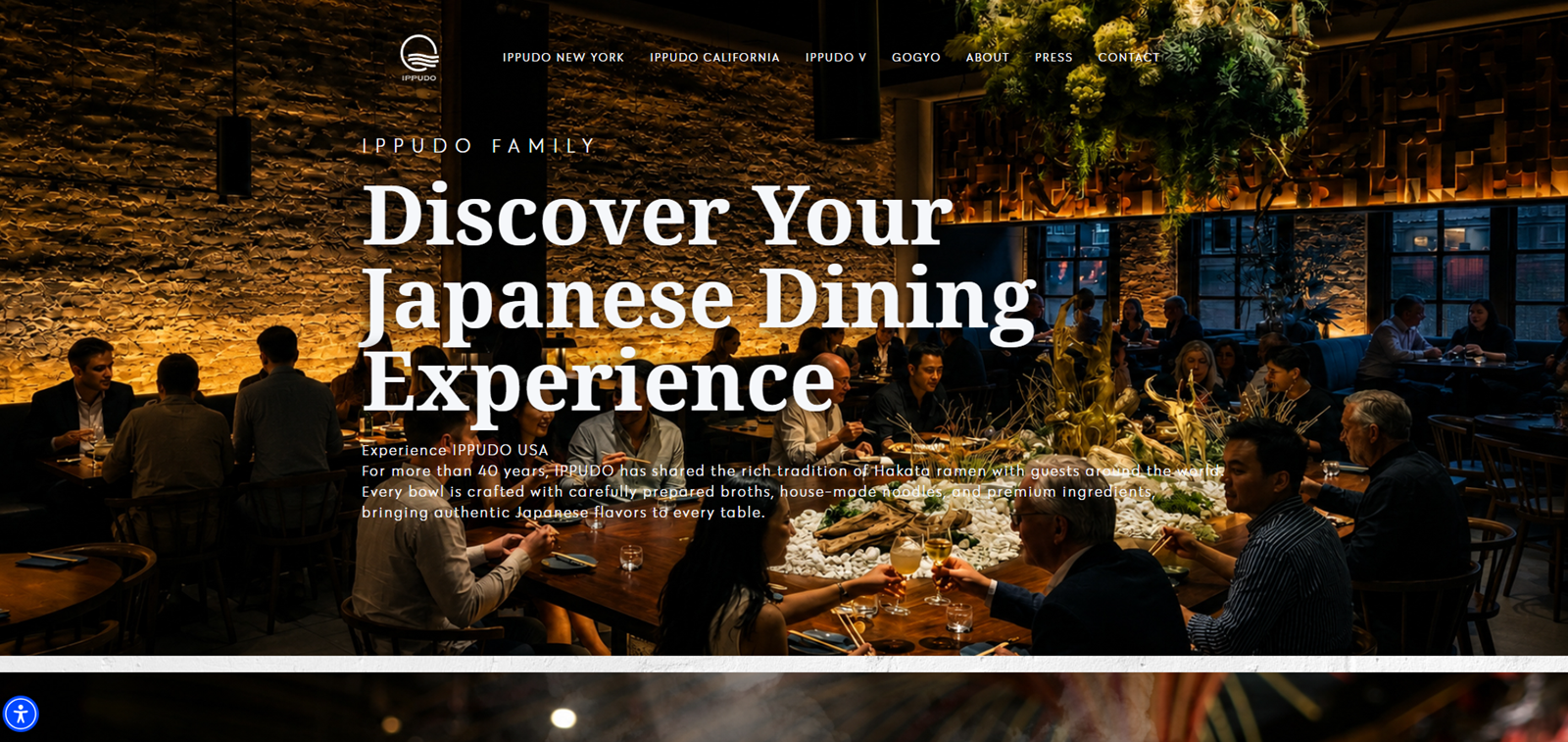
Overseas Franchise Expansion Status
| Products and Services Offered | Hakata tonkotsu ramen, kaedama noodle refills, side dishes such as gyoza, and alcoholic beverages (overseas locations also serve izakaya-style dishes and plant-based ramen) |
|---|---|
| Countries of Overseas Expansion | 16 countries and regions (as of September 2025) |
| Number of Overseas Locations | Approximately 140 stores (as of September 2025) |
| Franchise Contract Type | A combination of directly managed stores and area franchises, including joint ventures with local partners |
Around 140 Overseas Locations, Expanding from the 2008 New York Entry
The turning point for IPPUDO's overseas expansion came with its entry into New York in 2008. For diners who had yet to encounter tonkotsu ramen, the brand led with a lively dining room and the experience delivered in every bowl.
Rather than simply serving a bowl of ramen, the brand presented the meal as a full dining experience, from an open kitchen where diners can watch the cooking to energetic greetings and attentive service. That approach drew queues and earned the brand a firm place in urban dining scenes.
Building on that success, the brand now operates in 16 countries and regions, with approximately 140 locations overseas as of September 2025. According to company-reported figures, overseas revenue has reached a scale roughly comparable with the business in Japan.
Outside Japan, the brand has expanded by applying several entry formats — directly managed stores, area franchises, and joint ventures operated through companies jointly funded with local partners — according to the regulations and business customs of each market. Operators considering a franchise or partnership can reference the model closest to their own situation.
Key Features of the Overseas Franchise
Over 15 Years of Overseas Operations Since the 2008 New York Entry
IPPUDO moved early into New York in 2008 as a Hakata tonkotsu ramen shop and has operated stores overseas for more than 15 years since. As of September 2025, that footprint spans 16 countries and regions.
More than 15 years of overseas operation has given the brand experience across different regulations, food cultures, and workforces. Behind the ability to run multiple stores under differing regulations, food cultures, and diverse workforces sits a clear division of roles, in which noodles, the core of the flavor, are produced in-house to keep quality consistent while menus and store formats are adapted locally.
By separating what stays fixed from what is localized, the brand has built a system that reproduces the same quality across countries and cultures without relying on the skills of a particular artisan. For operators weighing a franchise or partnership, this accumulated operational know-how serves as a basis for judgment.
A Store Model That Serves Alcohol in Prime Urban Locations and Extends Revenue Beyond Meal Times
Operating across markets with different regulations, food cultures, and cost structures presents practical challenges. According to company-reported figures, IPPUDO's overseas operations have reached revenue and profit levels roughly comparable with its business in Japan. In higher-priced markets, the brand has adopted a premium format designed for prime urban locations.
That approach is embodied by the bar-equipped, city-center format adopted at some overseas locations, particularly in the United States. Alongside ramen, these stores serve alcohol and izakaya-style dishes and include a bar counter, occupying prime sites in urban districts.
The founder ran a restaurant bar before opening a ramen shop, so a dining experience that includes conviviality and drinks is rooted in IPPUDO's origins. Serving alcohol and running happy hours puts the quieter hours between lunch and dinner to work and can lift average spend per customer, creating revenue opportunities beyond the main meal periods even in markets with high rent and labor costs.
In-House Noodle Production for Consistent Taste with Menus and Formats Adapted by Market
IPPUDO draws a clear line between what stays fixed in its product design and what is adapted locally. Noodles, the core of the flavor, are produced in-house after the operating Chikaranomoto group brought a noodle manufacturer into the group, standardizing cooking processes and quality standards. At the noodle factory in New York, even the water used for kneading and the temperature of the flour are precisely controlled, helping the brand maintain consistent noodle-production standards across markets.
Menus and store formats, by contrast, are built market by market. In Indonesia, a Muslim-majority market, the brand set up its first halal-dedicated format, and in New York and California it runs plant-based ramen shops that use no animal ingredients, made only from plant-derived materials such as vegetables and soy for vegan diners, designing the store format itself around religion and dietary customs.
Holding the flavor axis fixed while adapting everything around it is what anchors IPPUDO's distinct position. Standardizing quality around the noodles limits variation in taste as the store count grows and enables operations that do not depend on individual artisans. Franchise owners can therefore treat that reproducibility as an input to their investment decision.
The flexibility to adjust the format itself against the constraints of a pork-bone base and regional preferences widens the range of markets open to the brand. Balancing consistent quality with local adaptation has supported the brand's expansion across a wide range of countries and regions.
Reviews from Store Visitors
"Really loved the ramen here, all of it is pork flavoured. Loved the pork buns too. Must visit for those who love their ramen!"
"We popped into this restaurant for lunch having little idea of what to expect but it was a very lucky find. Our ramen dishes were delicious and substantial. There was an international clientele and somehow the atmosphere was very positive. Our waitress was welcoming and efficient."
"I visited Ippudo Ramen on a Saturday afternoon and was pleasantly surprised to find plenty of seating available. My family and I ordered the Shiromaru Motoaji and Karaka Men, and the soup was incredibly flavorful with a rich umami taste. The pork was cooked to perfection—tender and delicious—and the combination of the flavored egg and seaweed really brought the entire dish together. Even my 8-year-old daughter loved it and managed to finish an adult portion on her own! We also tried the pork bun, which was decent but not particularly memorable, and the gyoza, which arrived fresh and hot with great flavor. Overall, it was a pleasant experience with good service and tasty ramen. If you're craving a comforting bowl of noodles, Ippudo Ramen is definitely worth a visit."
"Great place! Authentic Japanese menu, staff very kind, food is really good, and prices are reasonable — even more for NY. Do try the spicy dumplings if you like heat; they are spectacular. This place is commemorating 40 years in Japan this year, and is a great option if you are visiting the area. It is not easy to recognize when passing by, but it is a true hidden gem."
IPPUDO Company Information
| Brand Name | IPPUDO |
|---|---|
| Company Name | Chikaranomoto Holdings Co., Ltd. |
| Head Office Location | 1-13-14 Daimyo, Chuo-ku, Fukuoka, Fukuoka, Japan |
| Date of Establishment | 1985 (IPPUDO founded in Daimyo, Fukuoka) |


In the overseas Japanese restaurant markets I've covered, local reviews often reveal whether a brand has become part of the dining culture. Comments on IPPUDO repeatedly mention not only the ramen, but also welcoming service and a positive atmosphere.
What stands out to me is the system behind that response: expansion across 16 countries and regions since the 2008 New York entry, quality standards supported by in-house noodle production, and menus adapted to local food cultures.
The brand has also moved between directly managed stores, franchises, and joint ventures depending on the market. That history shows an approach shaped market by market rather than a single format applied everywhere.